 Copy Link
 X
X
 Facebook
 LINE
LINE
 LinkedIn
 Pinterest
 WhatsApp
 KakaoTalk
 NAVER
NAVER
 Weibo
Weibo
 WeChat
 Mail
Mail
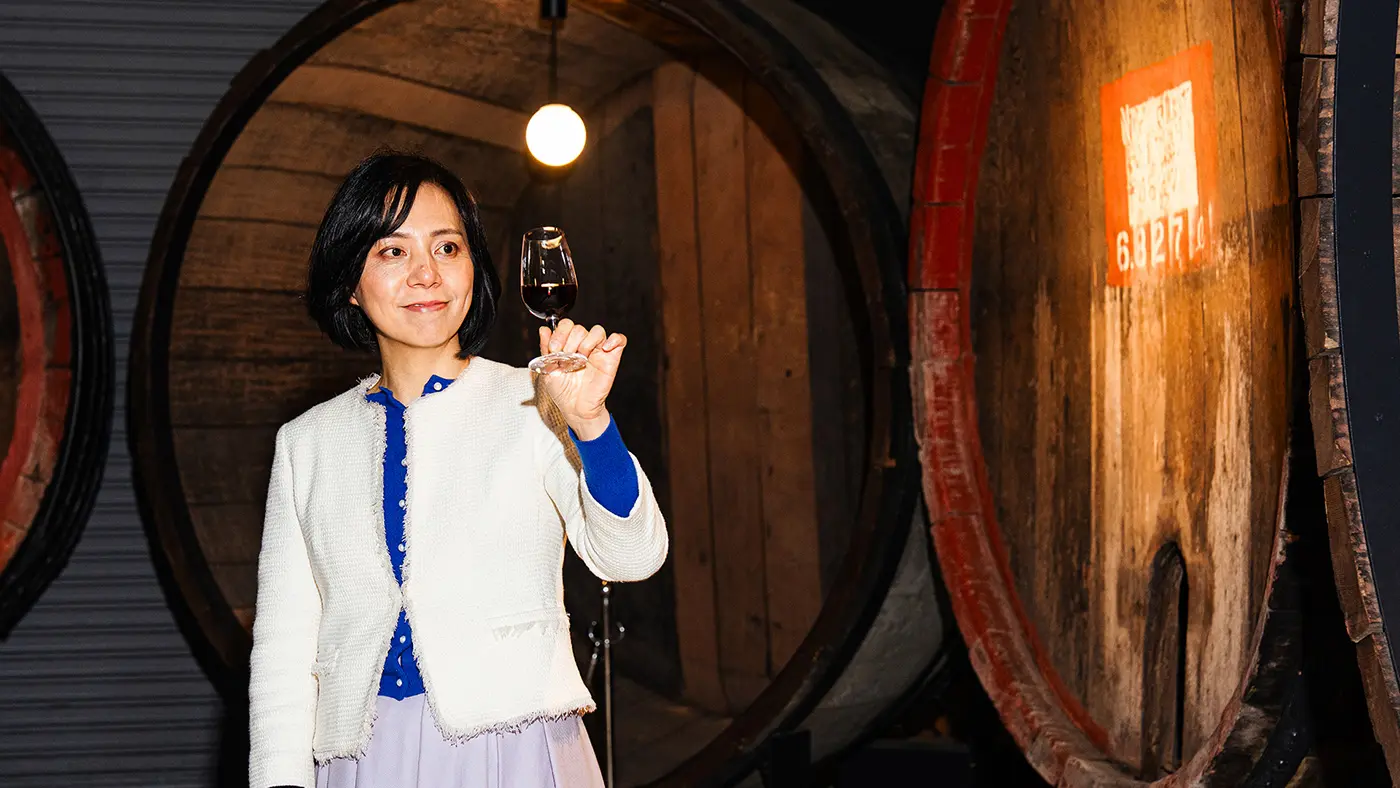
"OSAKA Mania Exploration" brings you the charms of Osaka from an enthusiast's perspective. This time, we visited Habikino City, one of western Japan's leading wine-producing regions, with Naomi Mori, Secretary General of the Osaka Winery Association and a wine enthusiast who works with winemakers to promote the region.
Habikino City, located in southeastern Osaka Prefecture, is a region where history and food culture blend together. Many ancient tombs are scattered throughout the area, including the Emperor Ojin Mausoleum, a component of the Mozu-Furuichi Kofun Group, a World Heritage Site. Blessed with natural surroundings, Habikino is also known as a renowned grape-producing region, with wineries within the city producing exquisite wines. Furthermore, the meat industry developed after the Meiji period, establishing the city as a "meat town." Naomi Mori, an expert on wine, will introduce Habikino, which has built a unique food culture against the backdrop of its rich natural environment and industrial history.
Guide
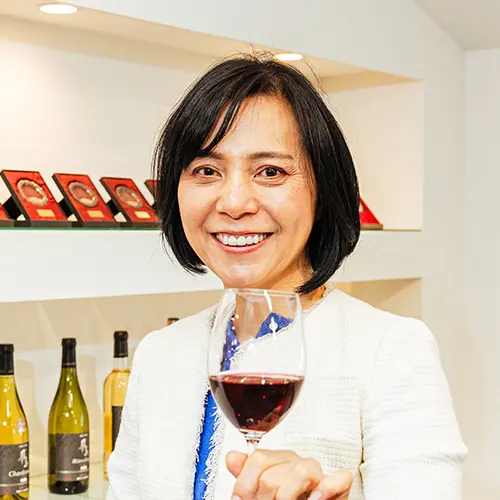
A tourism planner born and raised in Osaka. He discovered the charm of Osaka wine through his work and became so engrossed in it that he even obtained a sommelier qualification. He serves as Secretary General of the Osaka Winery Association and has been interacting and collaborating with various wineries for over 10 years. With the motto "Eating is living!", he walks the city every day and enjoys food. He is also active as a lecturer and food writer.
Visit Asuka Wine, where meticulous cultivation and brewing methods are practiced
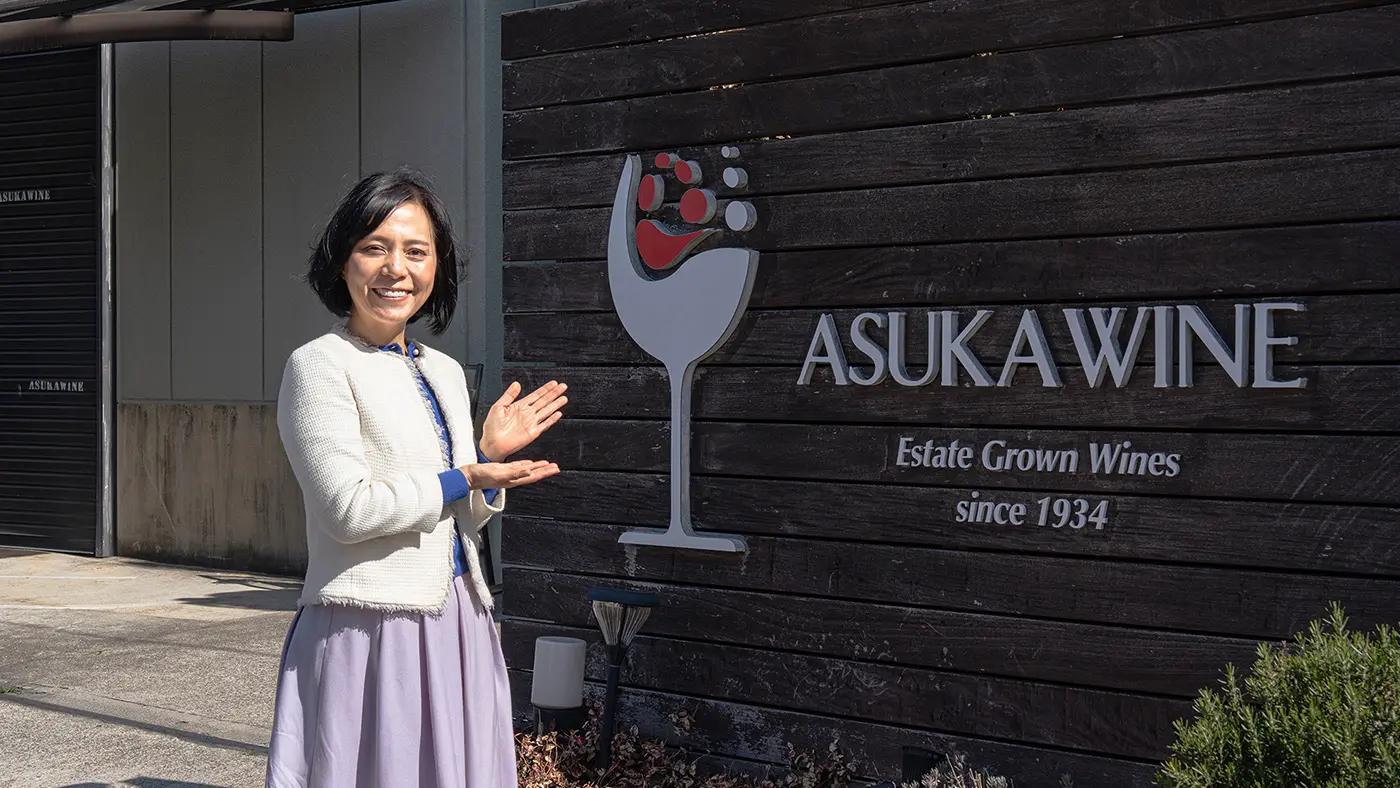
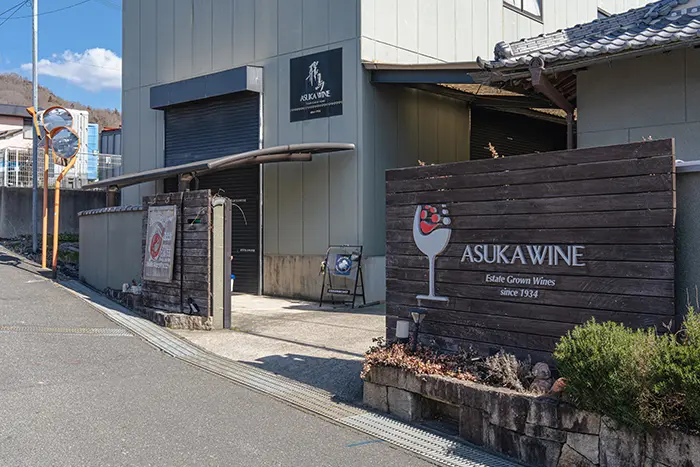
Asuka Wine, located close to Kaminotaishi Station on the Kintetsu Minami Osaka Line, is a winery founded in 1934 by grape farmer Yoshio Nakamura, which handles everything from grape cultivation to wine brewing. Even today, about 70% of the grapes used for the winery's ingredients are grown and harvested on the company's own farm. Mori introduced second-generation representative Yuzo Nakamura as "a winemaker who is extremely particular about his work, starting from the fields."
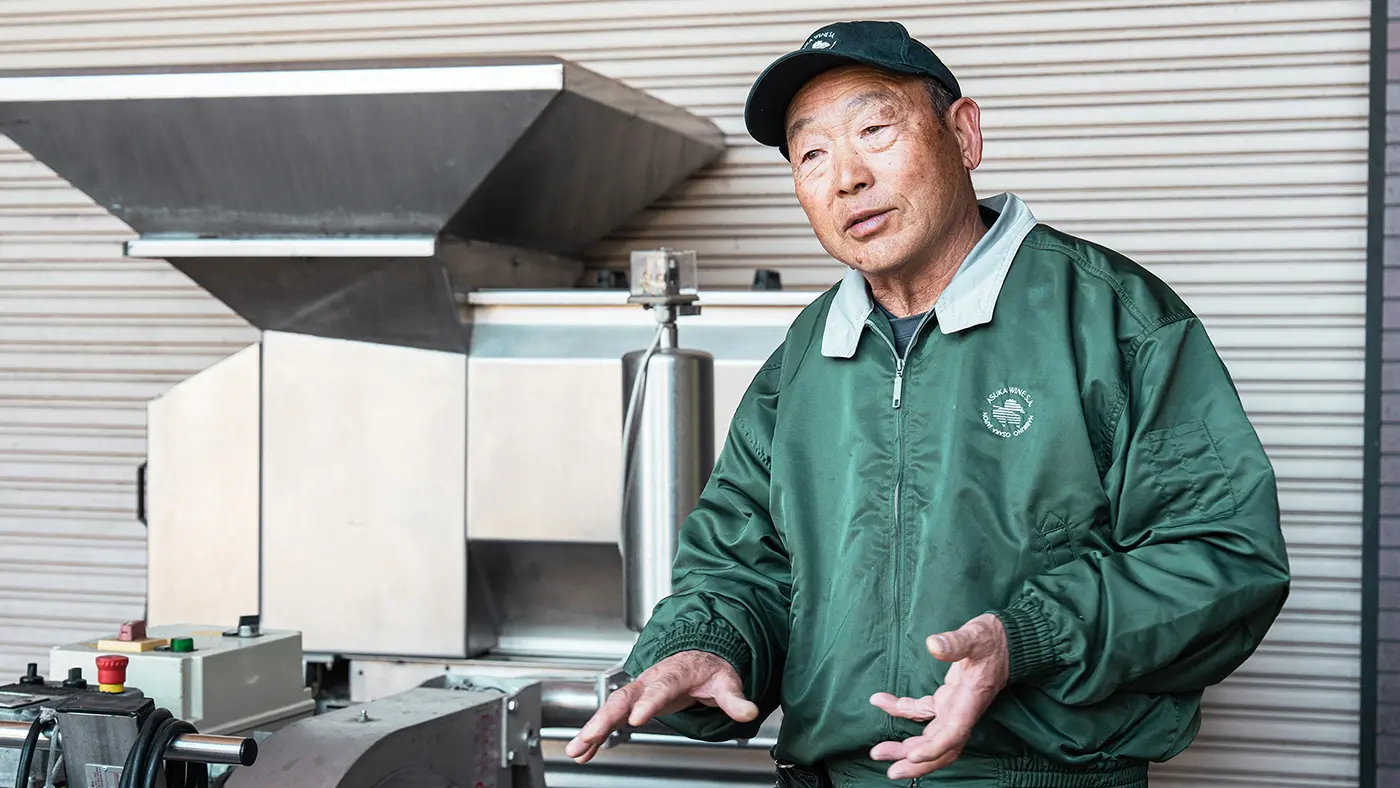
Nakamura-san
I was out in the fields just now. We make our own compost and seedlings, so we have a lot to do.
Mori-san
Yuzo, you really love farming! I think your love for farming is the best in Osaka. For example, growing seedlings is a very difficult job with a low success rate, but why do you go to such lengths?
Nakamura-san
We still want to increase the amount of grapes we cultivate ourselves, which means we need a large number of seedlings. It's important to keep going because it's difficult to succeed.
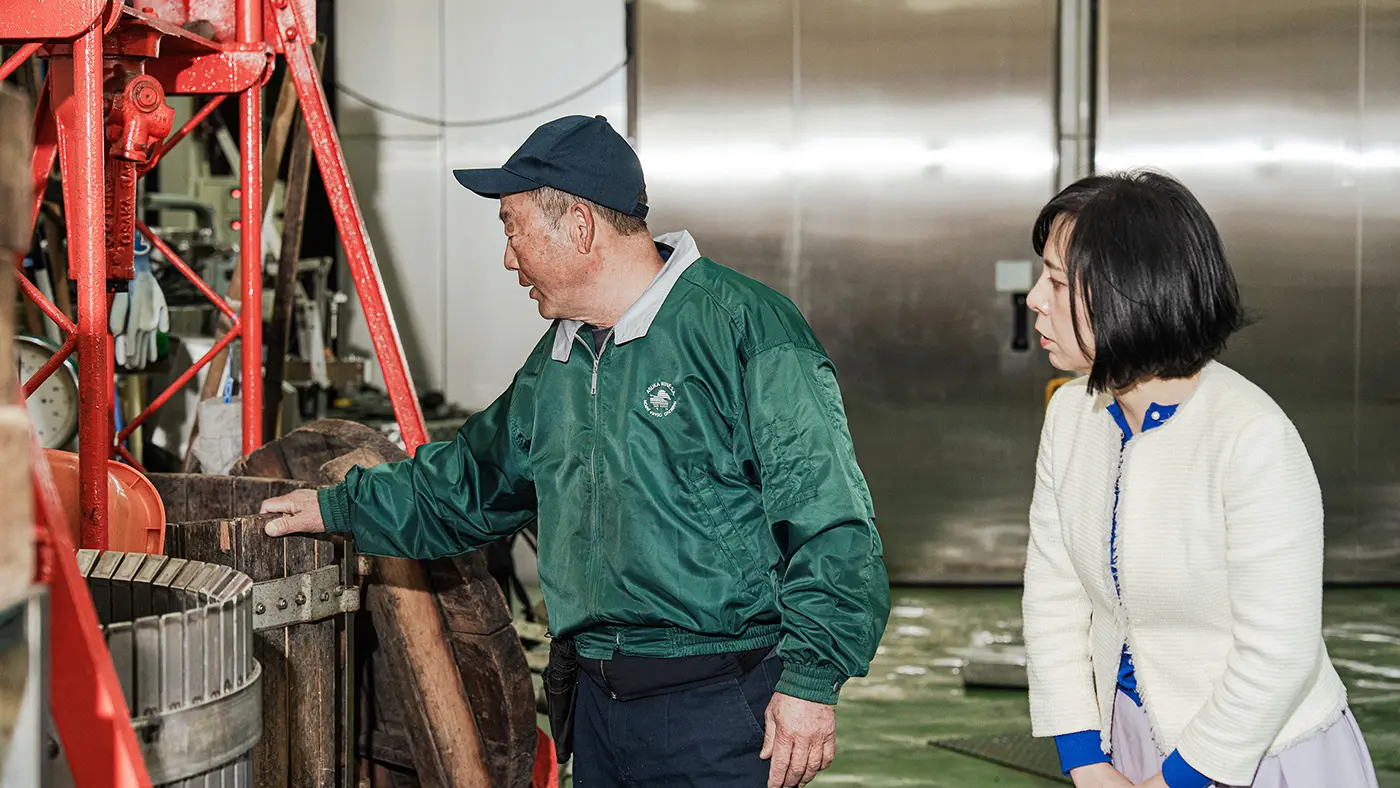
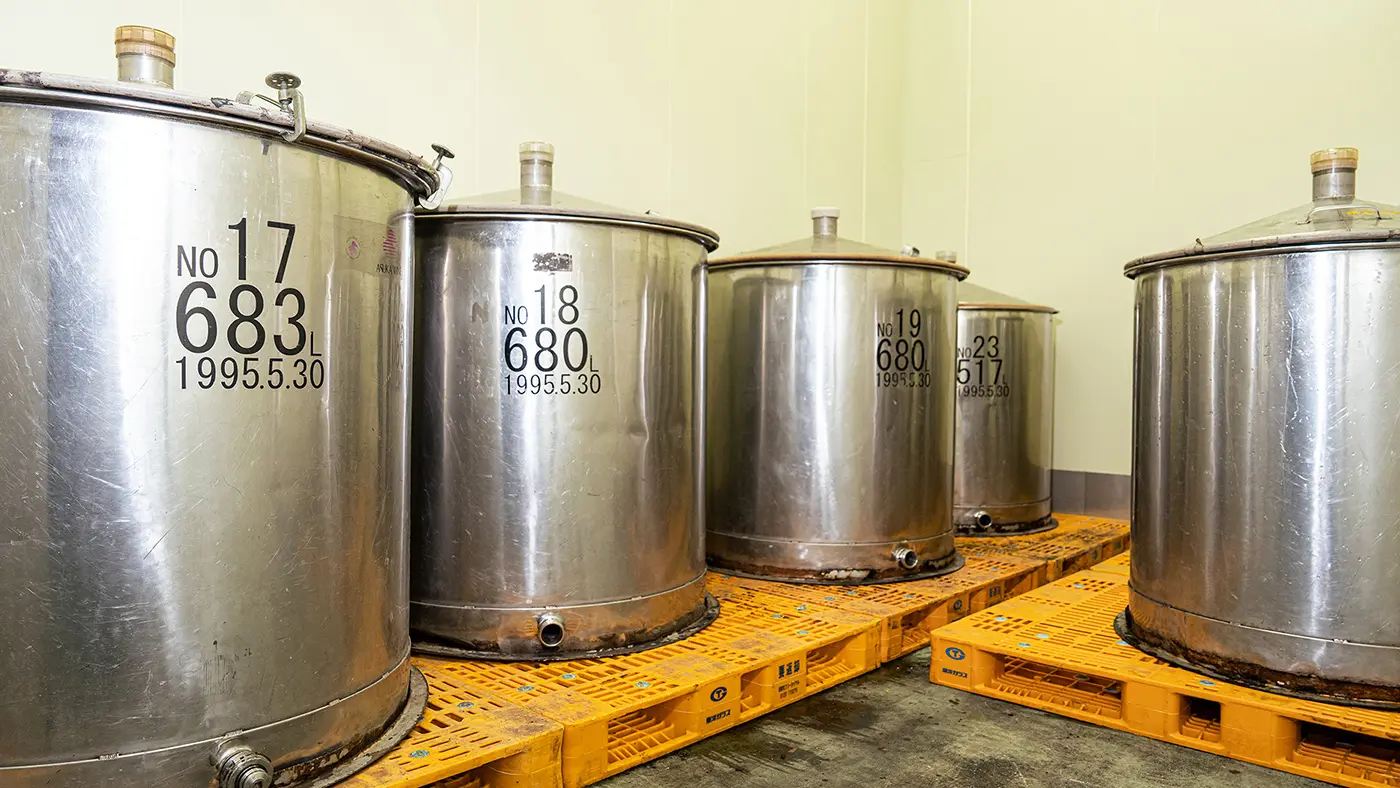
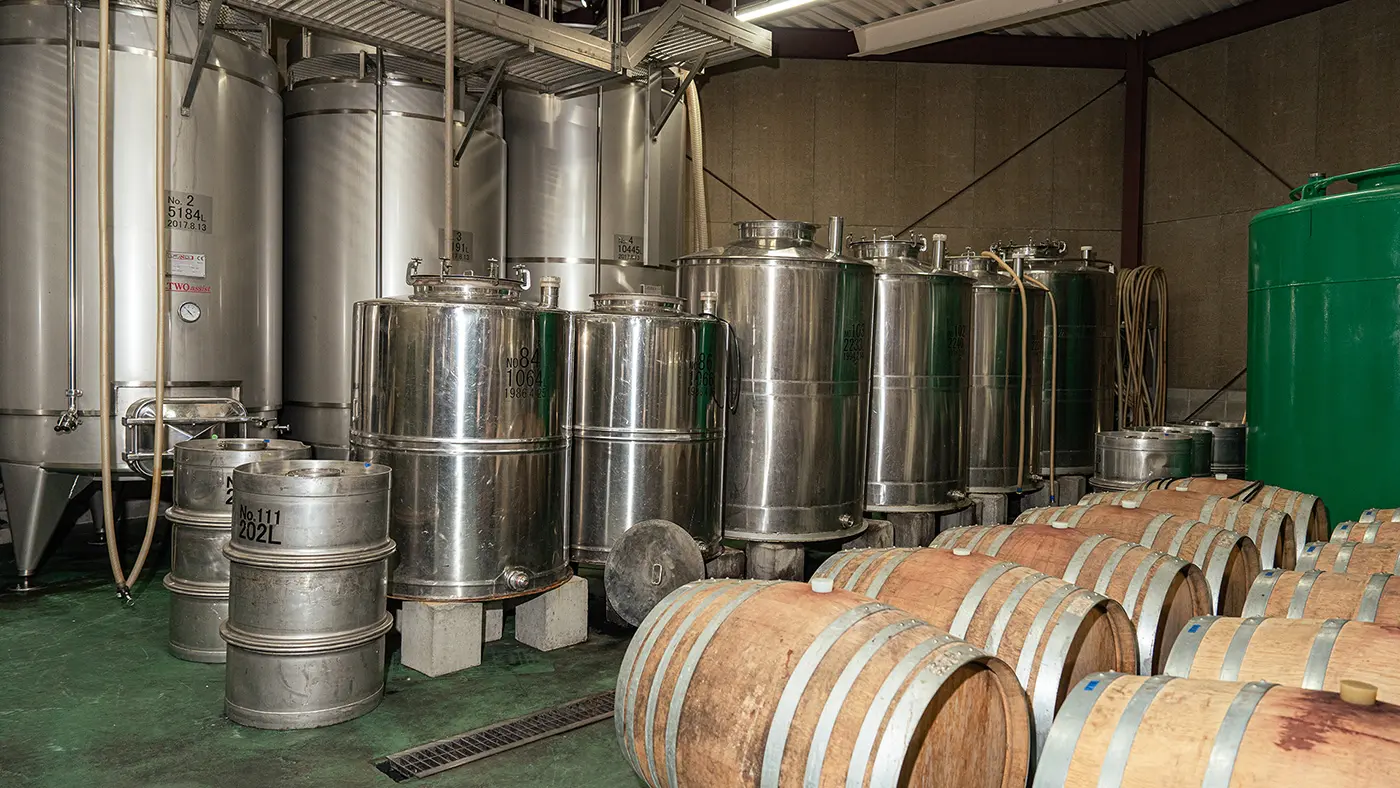
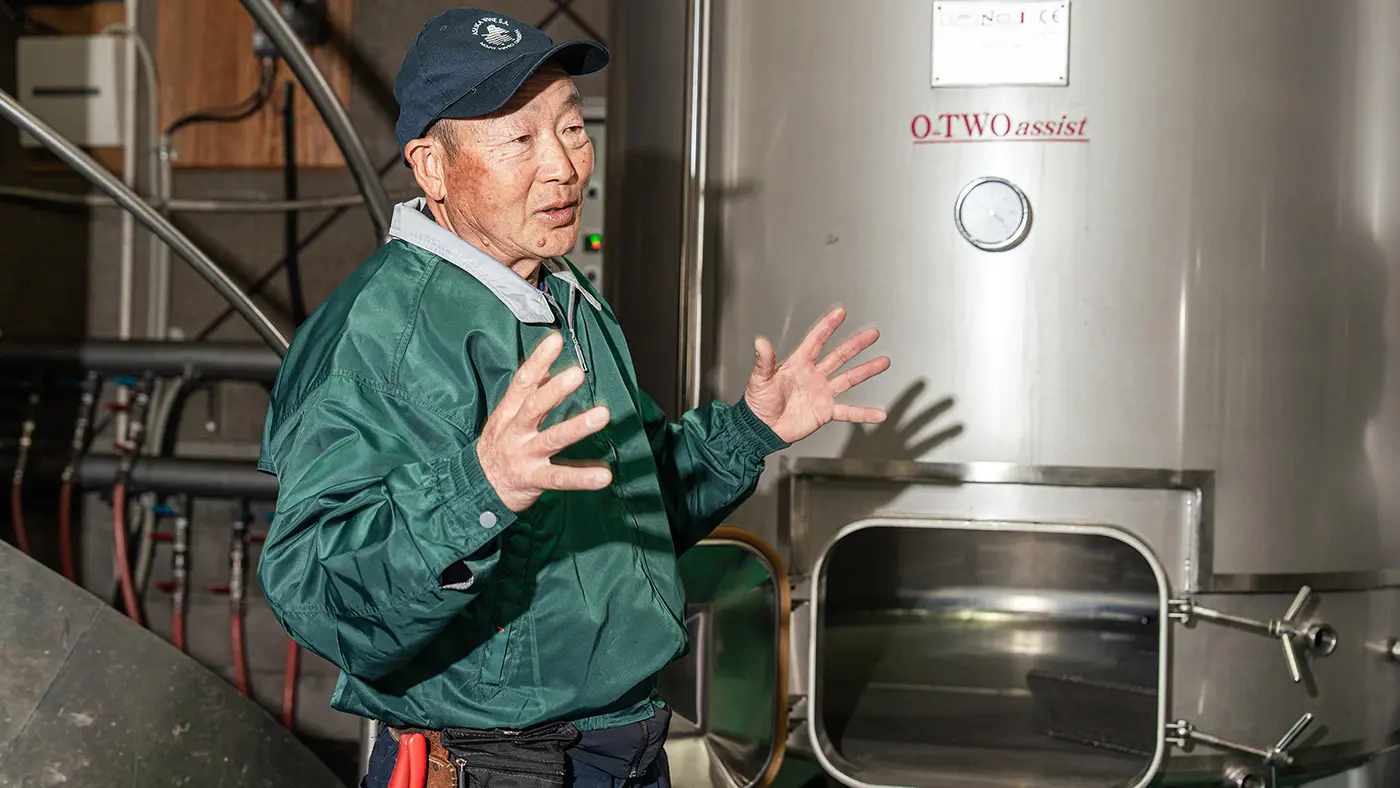
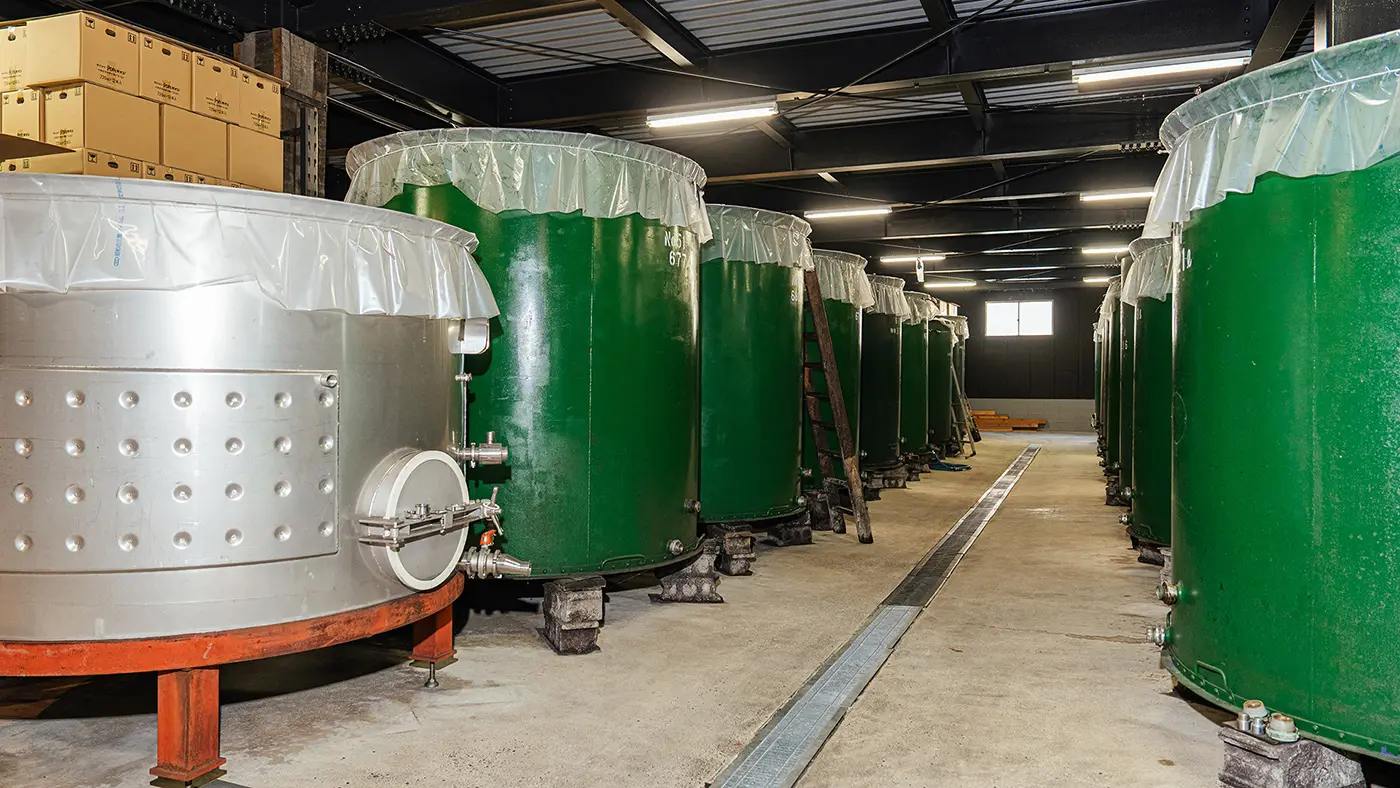
The winery is located across from Nakamura's home. The house, fields, factory, and shop are all next to each other, giving a glimpse into the lifestyle that is unique to a wine-producing region. The factory is lined with large pieces of equipment, including a machine that separates the harvested grapes from the stems, a press, and tanks for storage and fermentation.
Mori-san
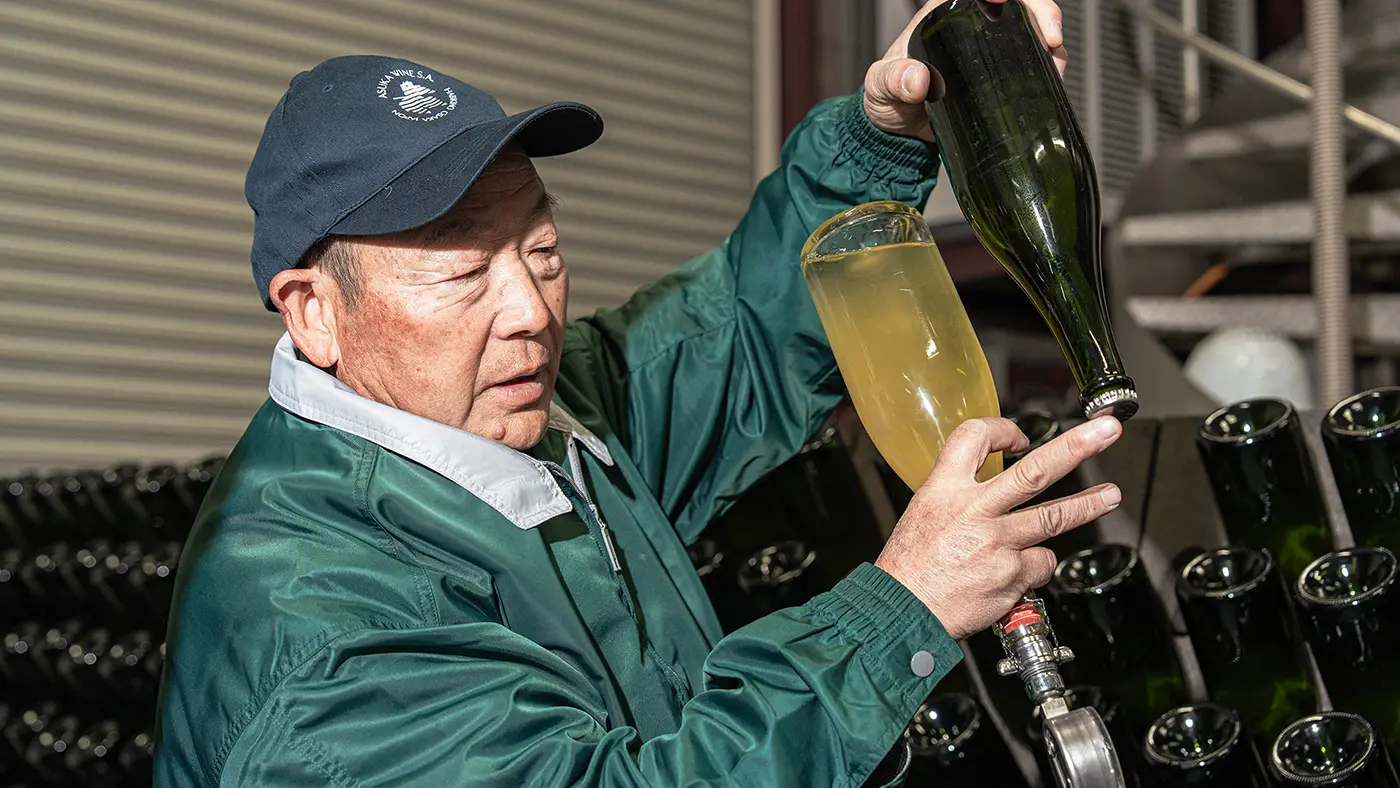
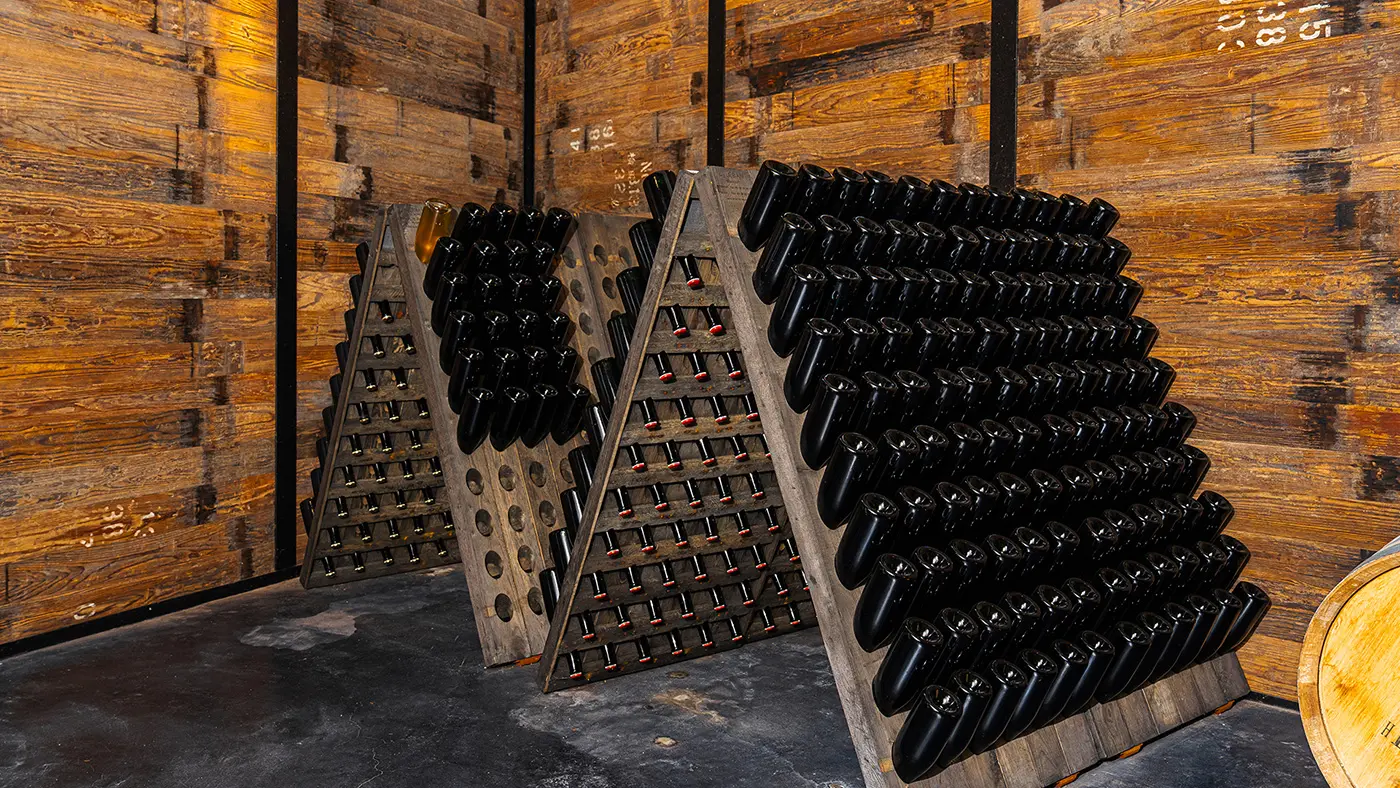
Another distinctive feature of Asuka Wine is the sparkling wine produced through "secondary fermentation in the bottle."
Nakamura-san
Yes, it's the same method used to make Champagne, a region of France.
Mori-san
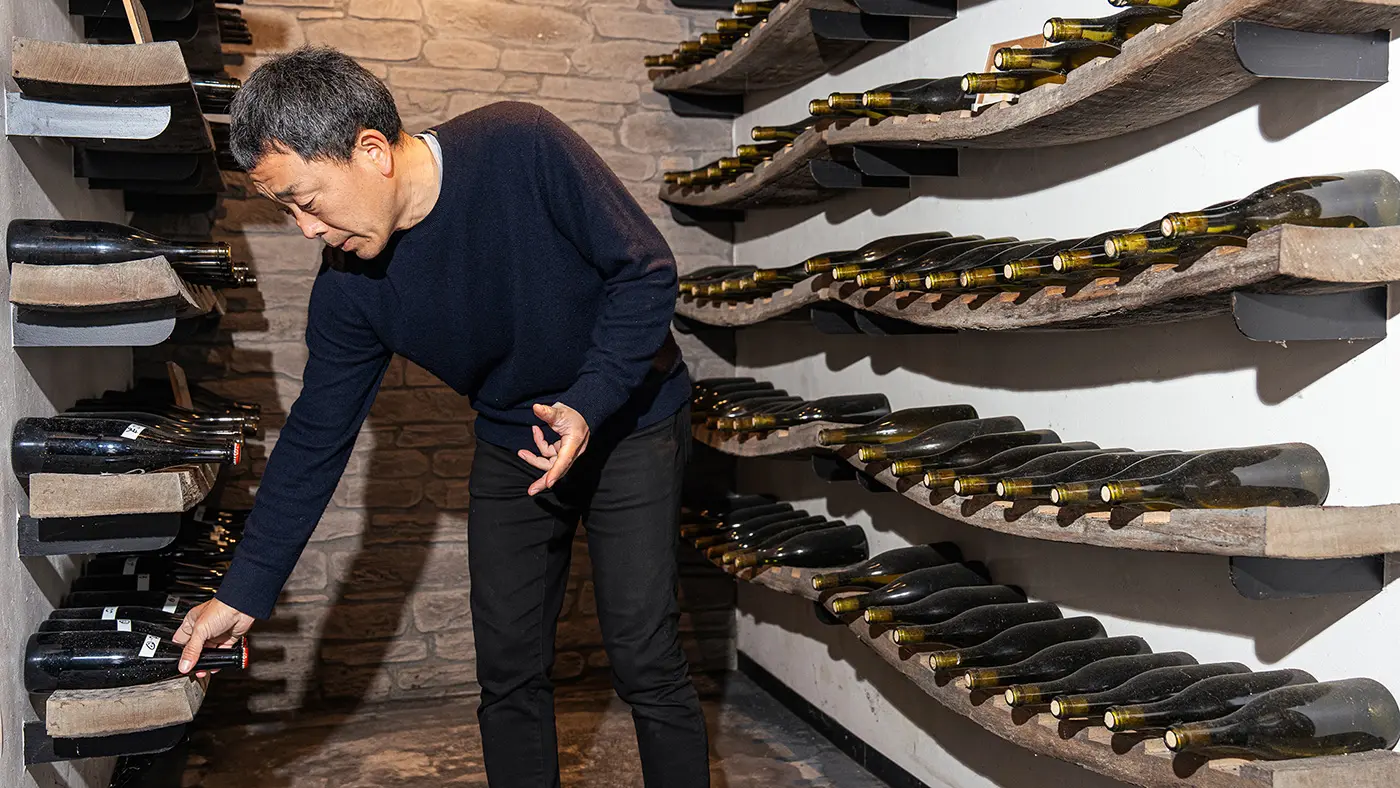
The bottle is placed upside down on a stand called a Pupitre, and each day you have to turn it by hand a little at a time to collect the sediment in the bottle's mouth...it's a time-consuming job.
Nakamura-san
It takes more time and effort than filling the bottle with carbon dioxide, but the finished product tastes different. What I want most is to make something that I think is delicious.
Mori-san
Yuzo is meticulous about the intricate process, from growing the seedlings to brewing and secondary fermentation. He talks about it calmly, but it's something that no one else could do!
Tasting the sparkling wine that has won the gold medal for two consecutive years. What is Asuka Wine's next goal?
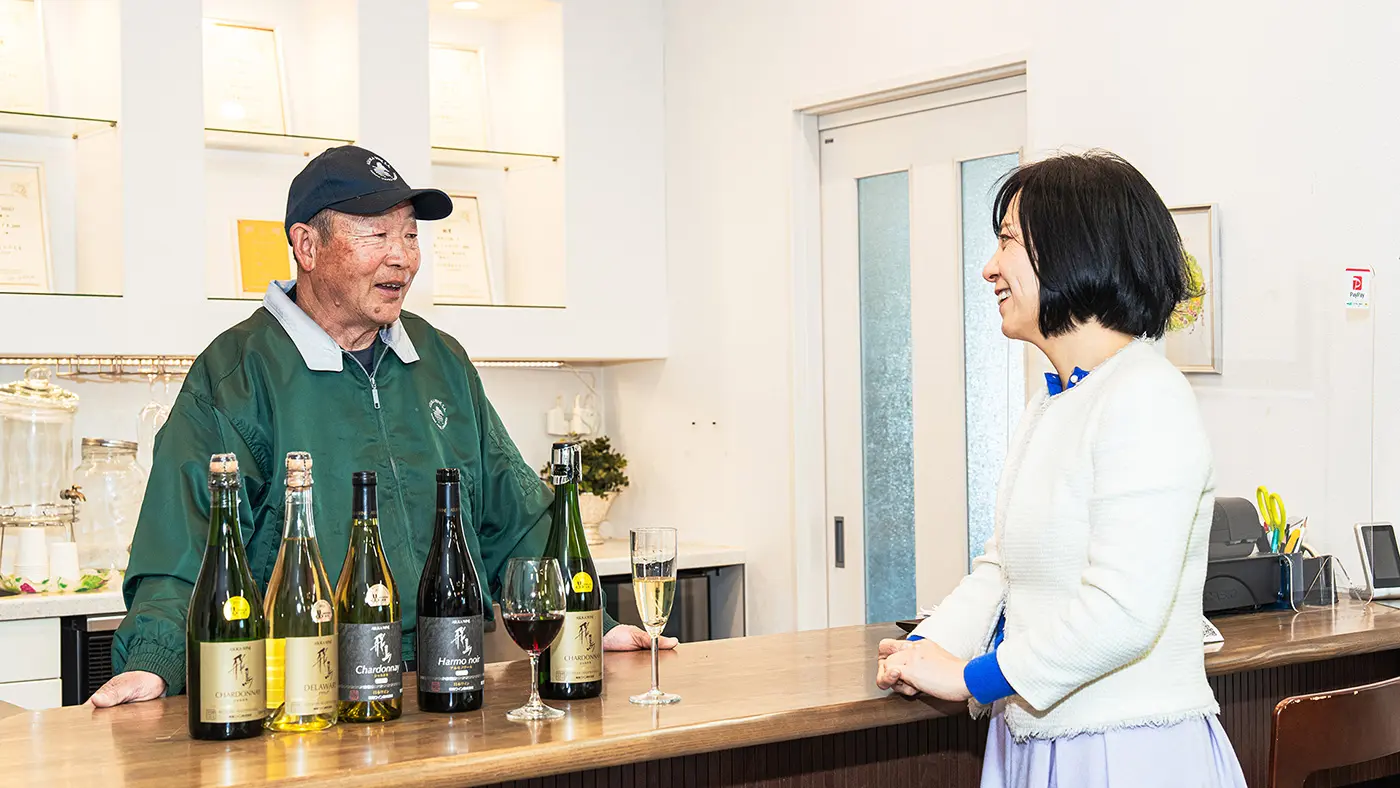
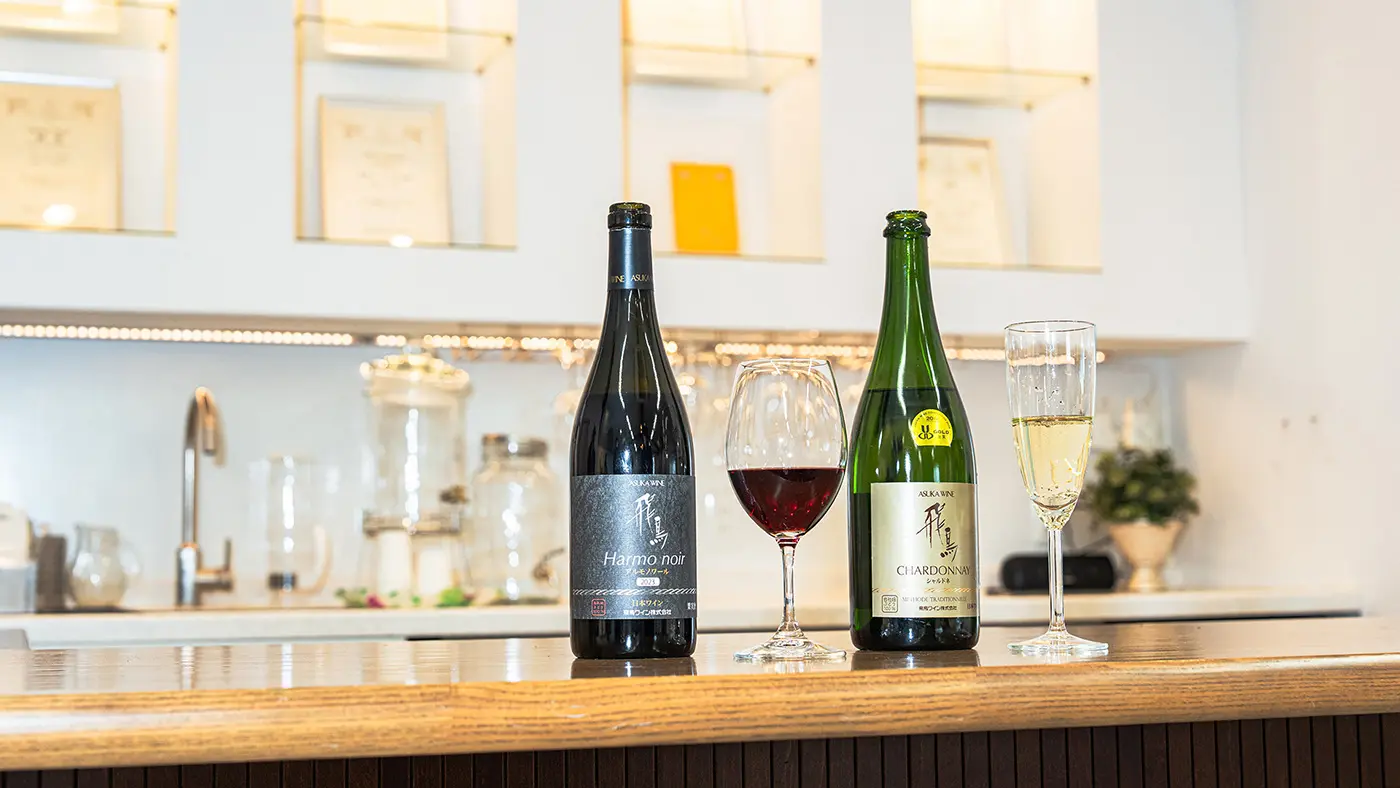
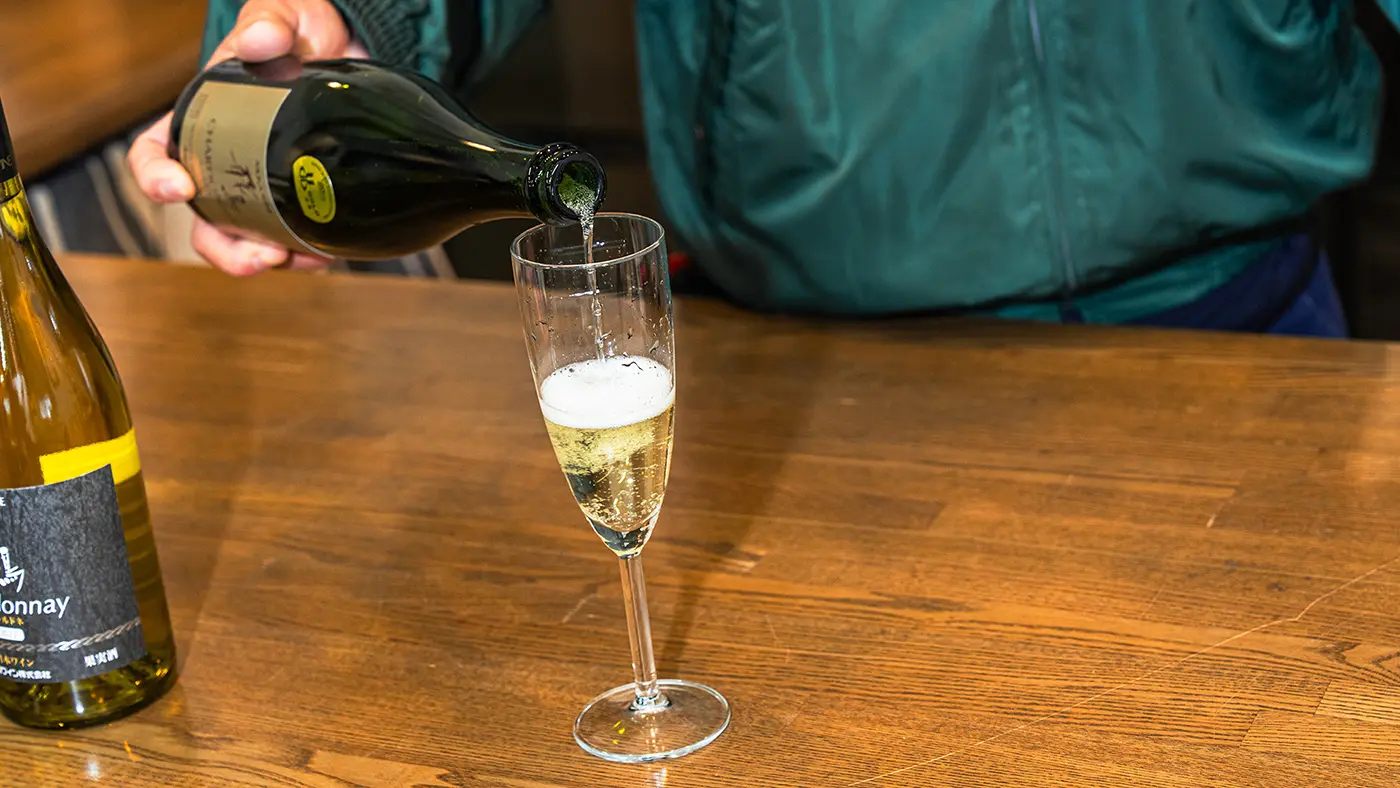
The winery has a salon on the second floor, where we sampled the Asuka Sparkling Chardonnay, which has won the gold medal at the Japan Wine Competition for two consecutive years.
Mori-san
It has the delicacy and richness that only bottle fermentation can provide. The balance of fruit and acidity is good, and it's crisp and delicious. I'd like to hear your thoughts on winning the gold medal.
Nakamura-san
We were confident because we had harvested good grapes, and in fact, in 2024 (our second year), we aimed for the gold medal. That made me even happier than when we won the first time. We used grapes from a plot that my father said was "the best field."
Mori-san
Oh really! So both father and son won the gold medal. This sparkling wine is popular among restaurant staff, who say it goes well with fish, Japanese cuisine, and even meat.
Mori-san
Asuka's wines are well-balanced while taking advantage of the characteristics of each grape variety, and are said to have a strong "characteristic" feel. Yuzo, what do you want to do in the future?
Nakamura-san
After all, it's all about making wine that I personally think is delicious. I'm looking forward to my son returning home and bringing a breath of fresh air to the wine world.
Mori-san
Nakamura's son, Shigeki, worked for the Ministry of Agriculture, Forestry and Fisheries for over 10 years before joining Asuka Wine in 2023. He is currently training at a major winery in Nagano Prefecture.
Nakamura-san
My son seems to have a wide variety of plants he wants to grow, so I might be able to focus more on what I want to grow.
Mori-san
I'm finally entering wine sage mode! I'm really not going to come down from the fields!
Nakamura-san
I want to do something that I can be satisfied with. Also, I would like to win a gold medal for red wine before I retire.
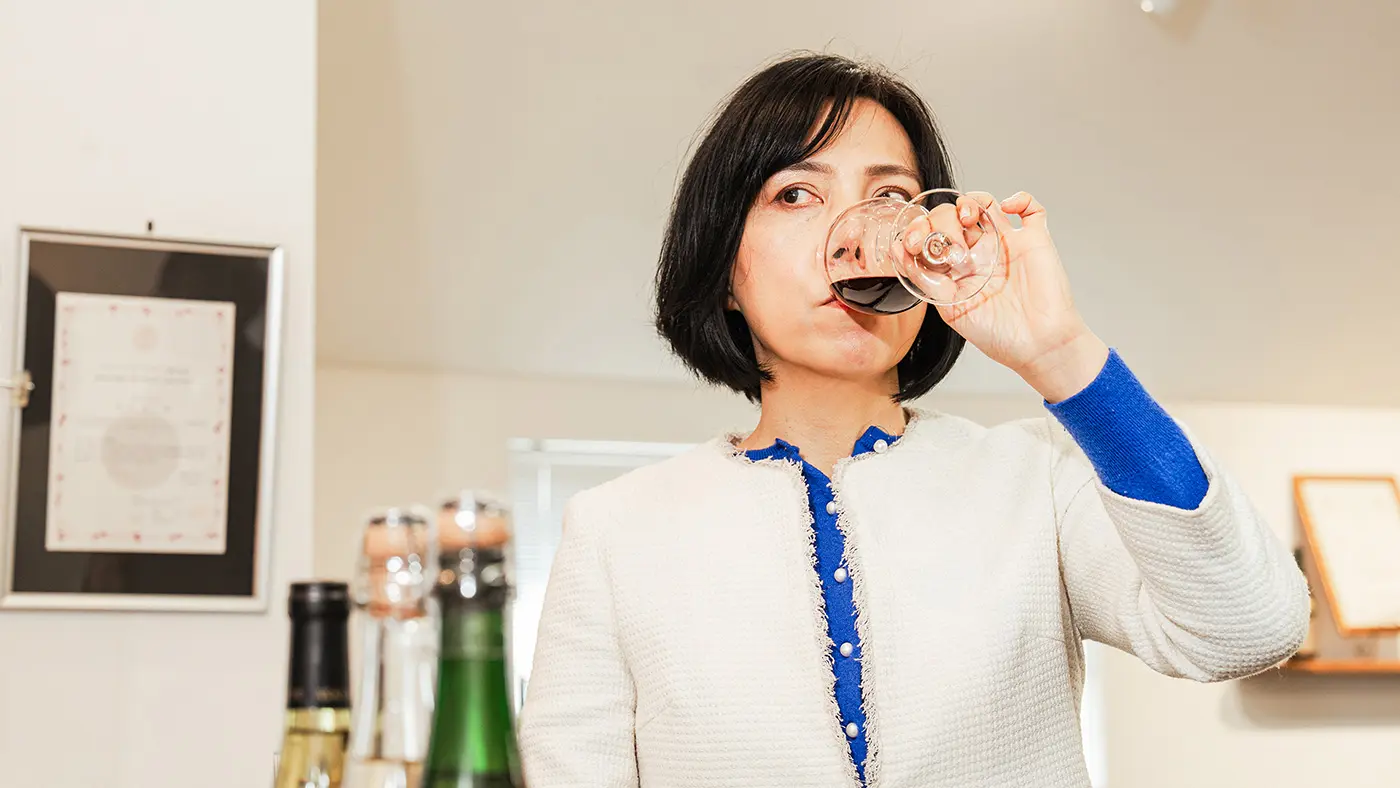
I had never heard of his next goal: to win a gold medal with a red wine! Yuzo is a winemaker, but he is also the most demanding wine fan. I was thrilled to see the essence of Yuzo, who continues to explore despite his long history of winemaking!
Kawachi Wine: A theatrical winery where you can learn about the history of winemaking in Habikino
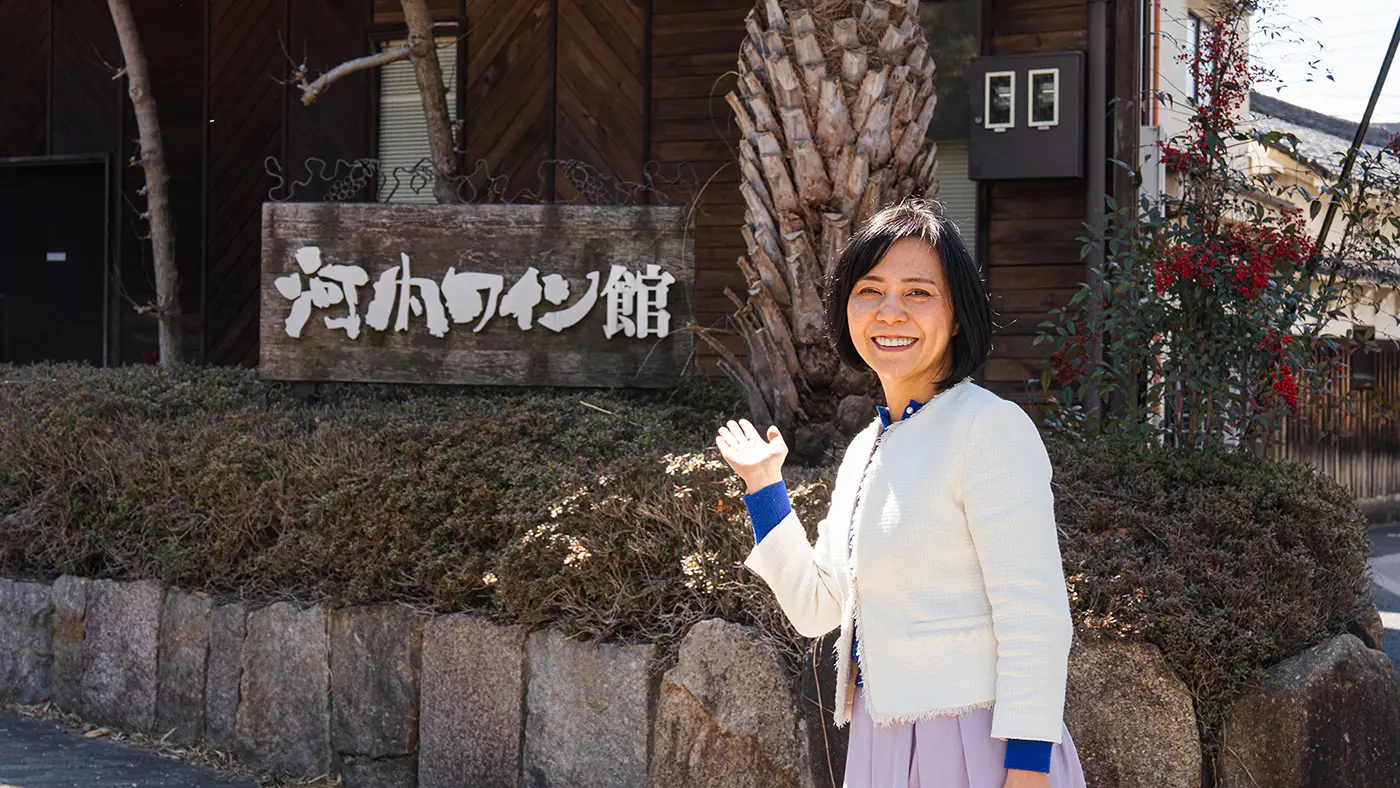
The spread of brewing in Habikino was triggered by the damage caused by the Muroto Typhoon in 1934. As a relief measure for grape farms, special licenses for the production of fruit wine were issued. At that time, it was Kondo Tokuichi, who founded Kontokuya Western Liquor Brewery, the predecessor of today's Kawachi Wine Co., Ltd., who advocated wine brewing as a measure to revitalize the region.
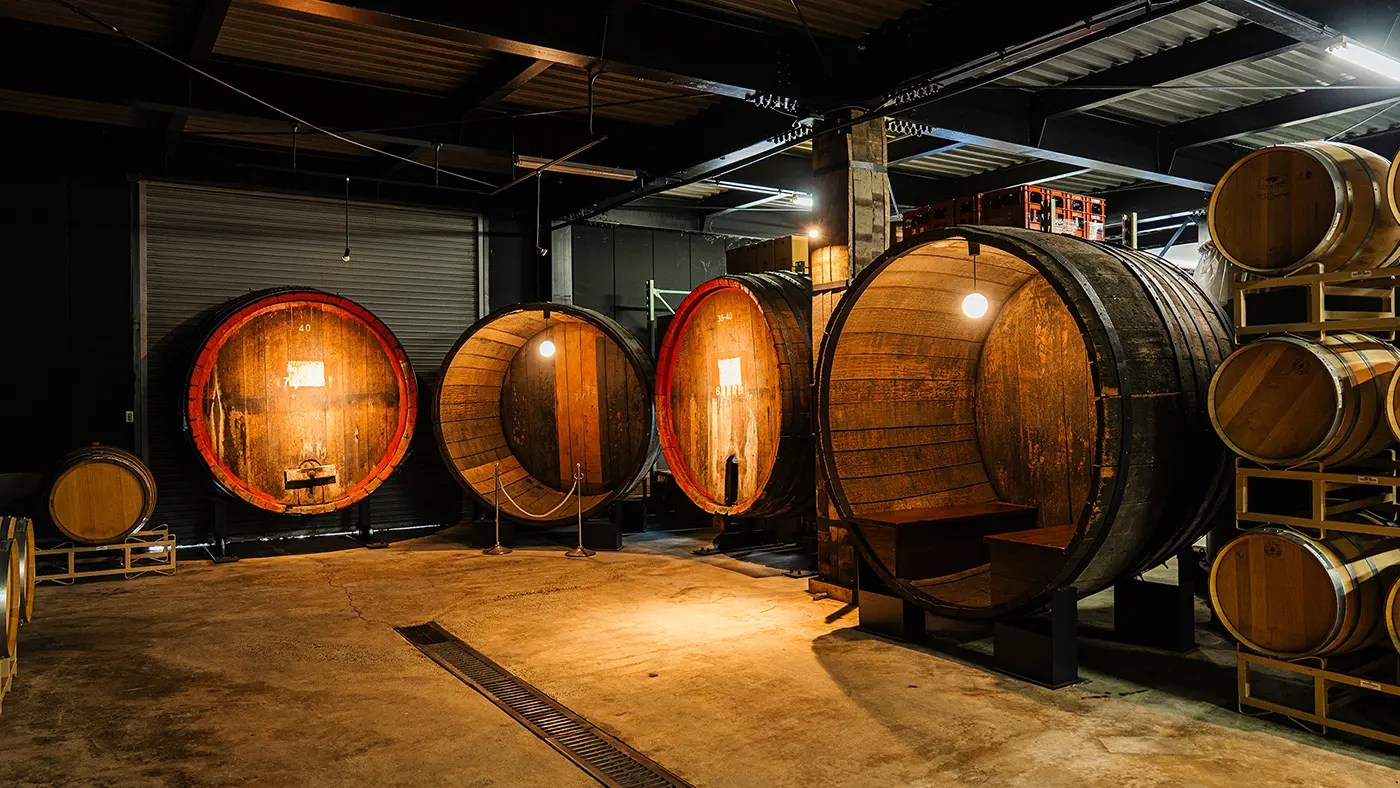
The second place we visited was Kawachi Wine, a winery with a long history that celebrated its 90th anniversary last year. President Kindou Shigeyuki, the fourth-generation owner, is someone that tourism planner Mori describes as "an expert at creating a space and getting people involved."
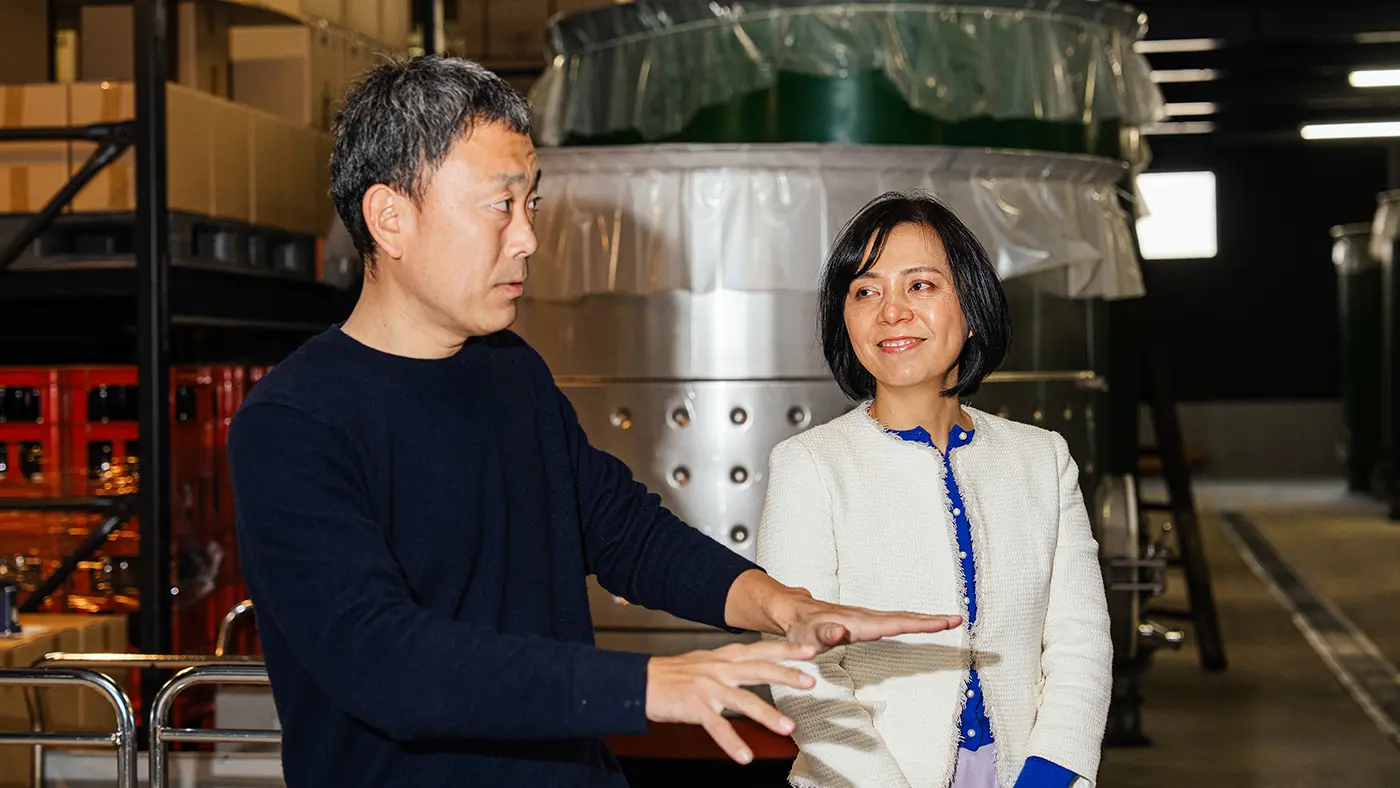
Kindou-san
We have 40,000 to 50,000 visitors a year. What we value is a lively atmosphere. We don't just want to watch, we want people to experience the harvesting process and be aware of the scents inside the factory, so we value appealing to all five senses.
Mori-san
In addition to tours, you have also taken on a new challenge by opening a restaurant called Konjikido in a renovated storehouse on the premises, inviting different chefs to run the restaurant on a daily basis. Why is that?
Kindou-san
We want our customers to take home fond memories. It's important to have a system where everyone involved benefits, not just us. We want customers to become fans of Kawachi wine, and Habikino wine in general. We always think from the customer's perspective, trying to think about what will make them happy.
Mori-san
They also seem to be proactive in creating ways to entertain customers and investing in human resource development.
Kindou-san
It was a big deal for me that my boss left us the wine hall. He may have only been halfway there, but I imagine that this place has been the catalyst for me to do what I want to do, such as supporting people who want to start wineries and planning experiential events for customers.
Mori-san
You have taken over the baton from your predecessor. What are you aiming for, Mr. Kindo?
Kindou-san
When making wine, we aim to produce a taste that satisfies us. In a broader sense, we hope to see healthy development as a wine-producing region. We not only use our own grapes, but also borrow the help of contracted farmers in the area, and we want to protect the resource of our 100-year-old vineyards.
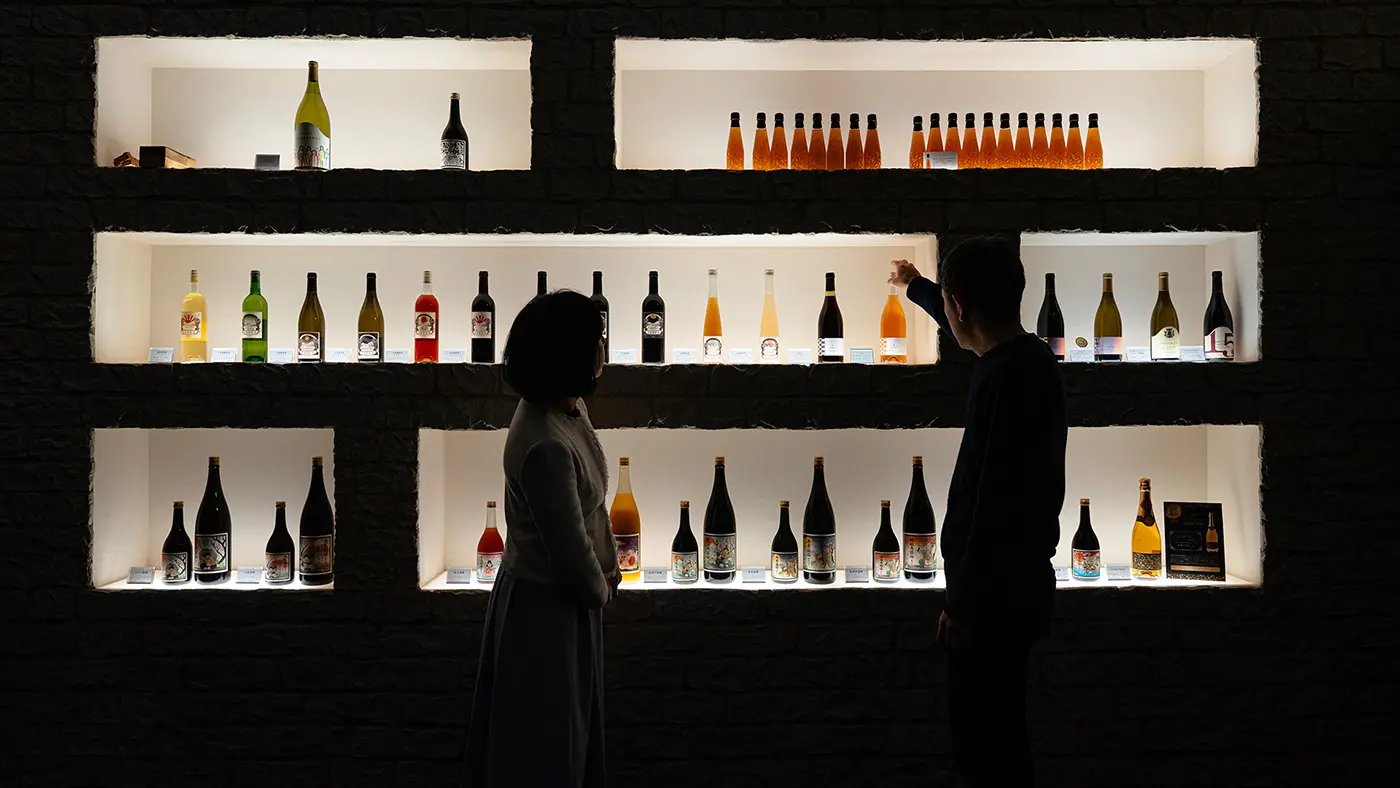
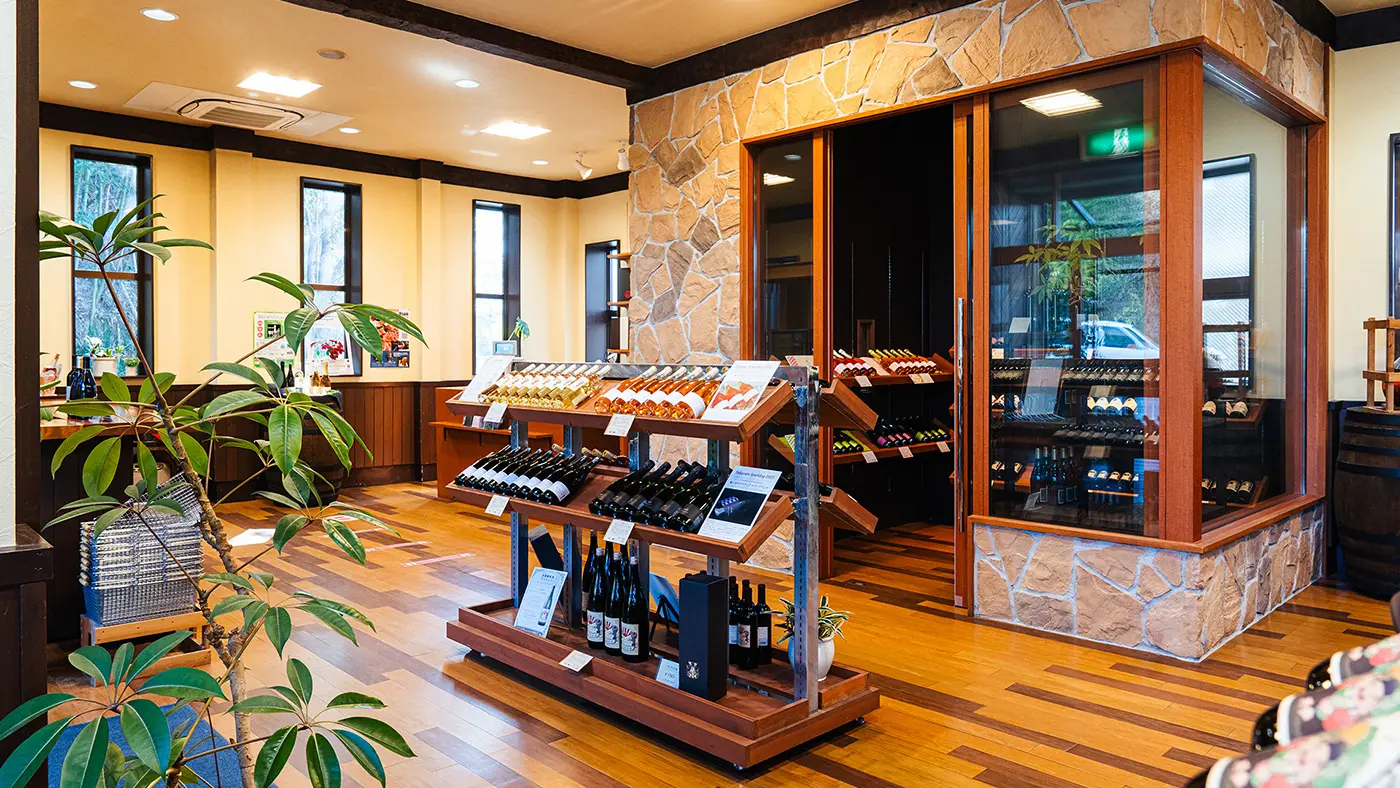
The shop has a wide variety of brands, and you can enjoy the contrast between flagship products and luxury lines.
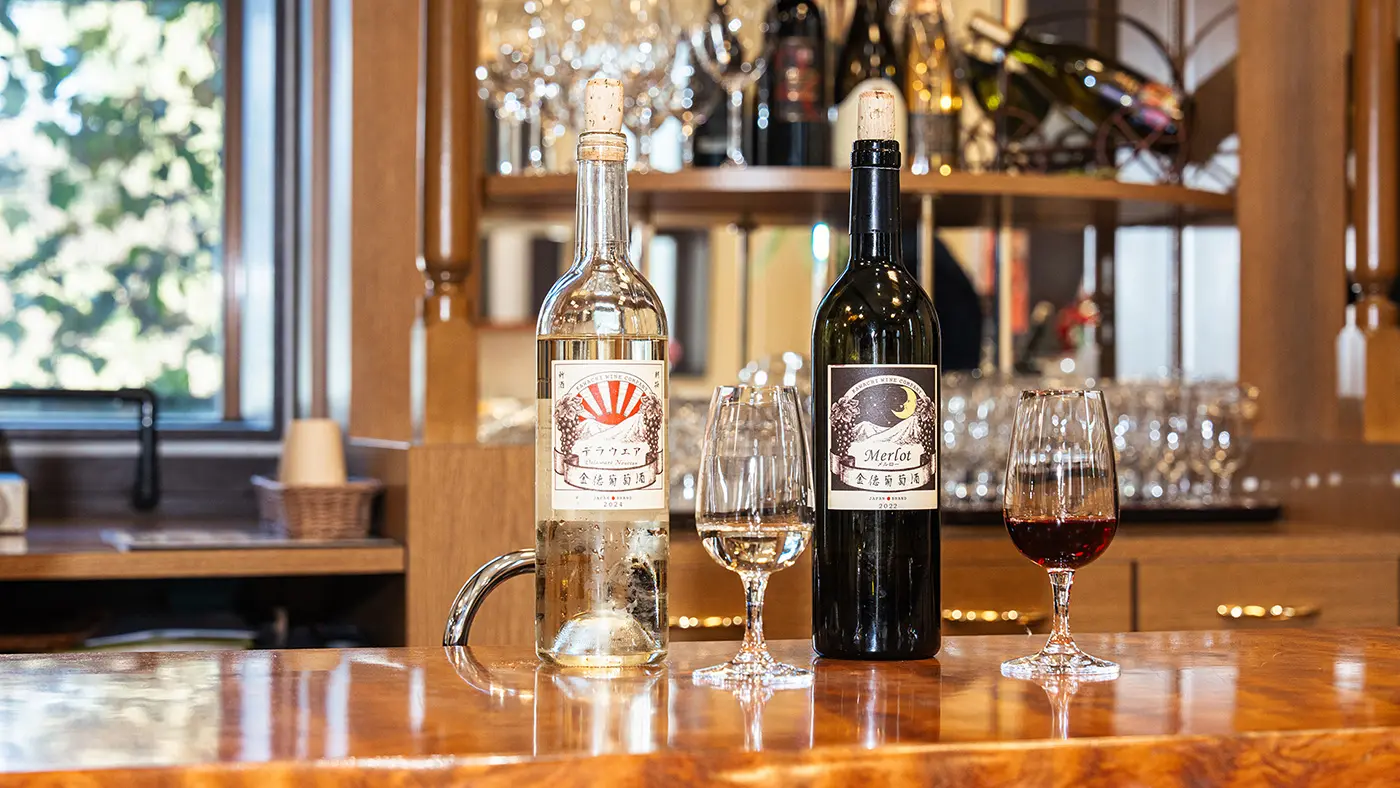
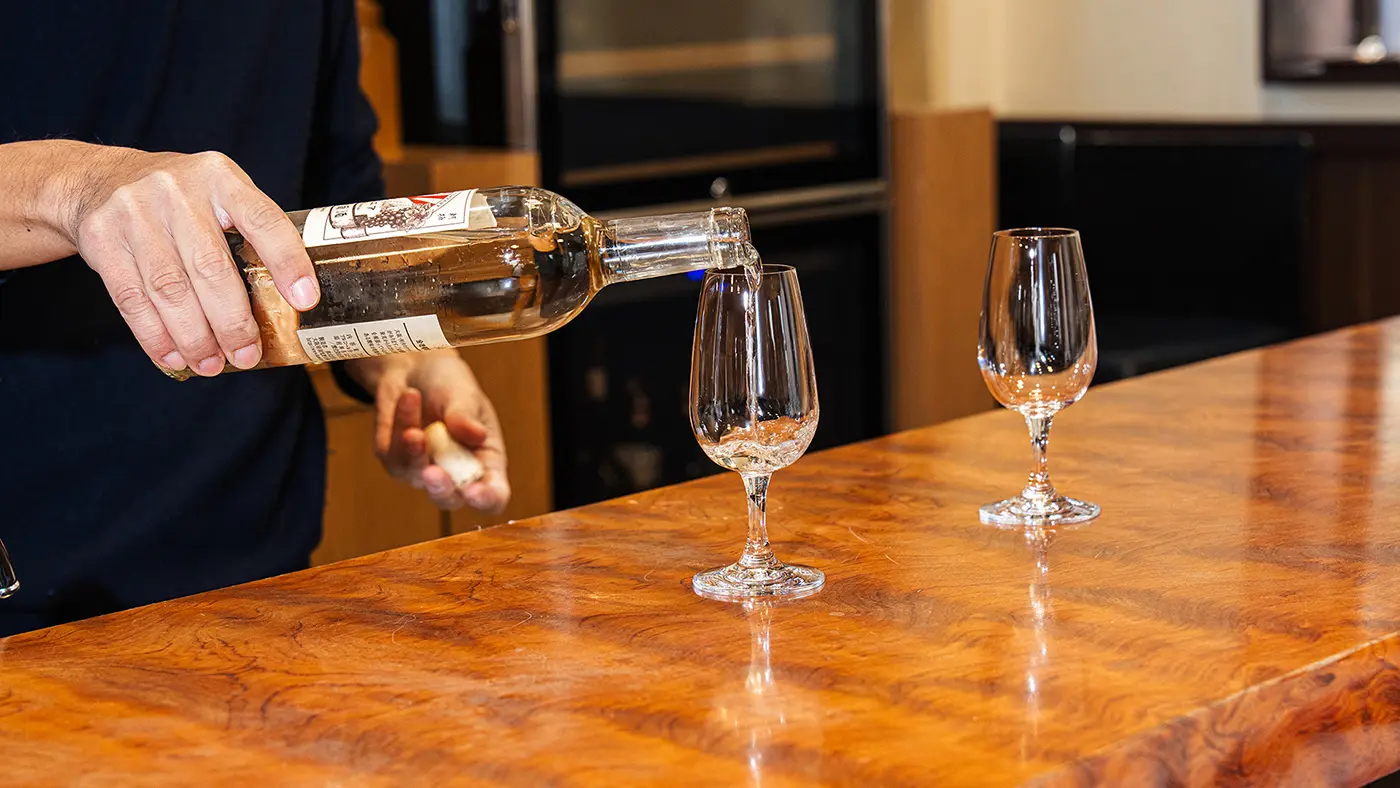
One of Kawachi Wine's defining features is its diverse range of brands and products. The "Kintoku Wine" series features a lineup of classic wines promoted by Kawachi Wine. We sampled a white wine made from "Delaware," the company's flagship variety and a representative Osaka grape.
Mori-san
You can really taste the refreshing acidity of Delaware. It's difficult to get the acidity of Japanese wine, especially in western Japan. There's also a slight astringency, and it's fruity yet rich in flavor.
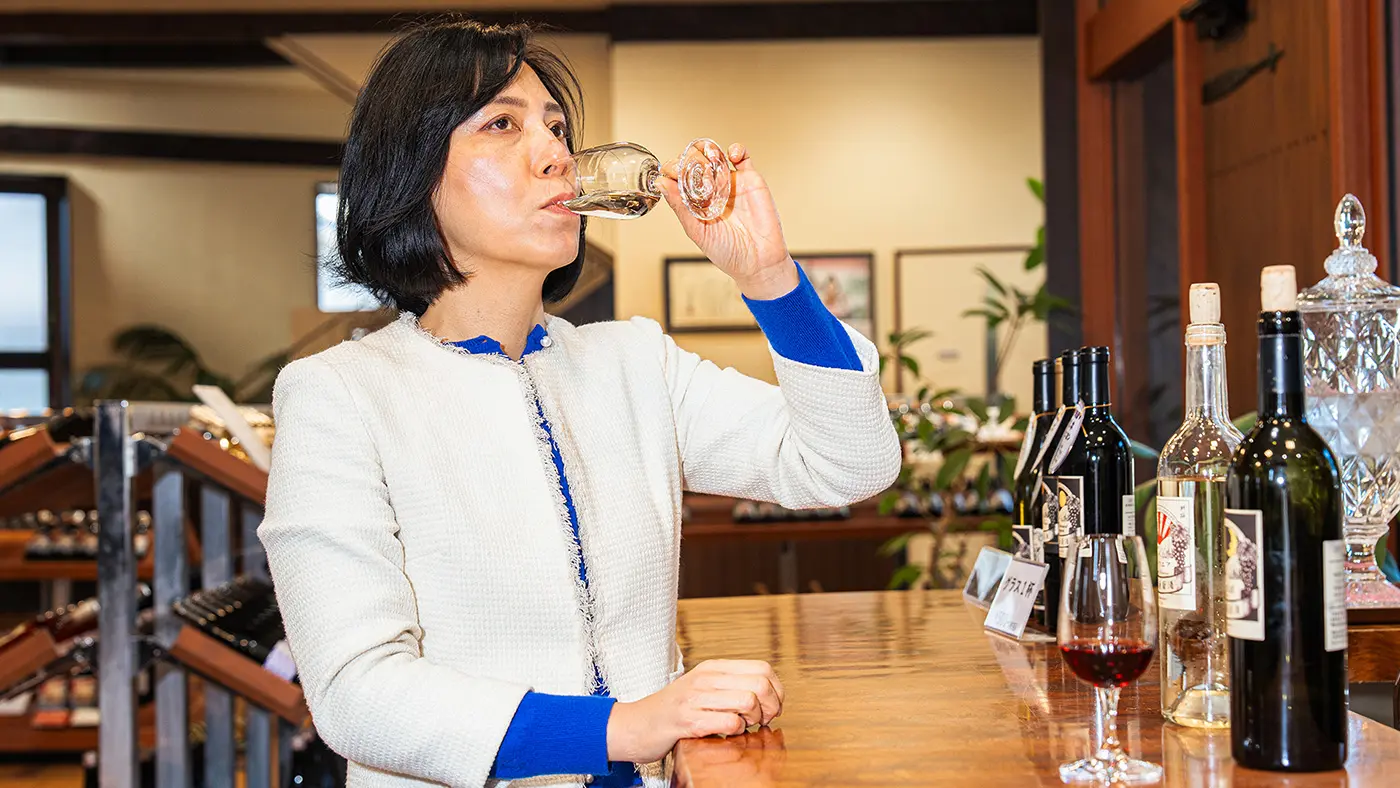
I believe that it is the role of a winery that produces local wines to launch a flagship that says, "This is what we are." And we want people to get to know wine through tours and experiences. We are a "theatrical winery."
Kindou-san
Next up is "Komagatani Delaware" from the "KIEI" series. The name was inspired by the word "up-and-coming."
Mori-san
Although it's the same white wine, this one has a stronger structure in aroma and flavor. It's fruity and sweet like a dessert, and has a unique character that really shows off Kindo's playful spirit!
Kindou-san
If Kintoku is a product that pursues stability and quality, then KIEI is positioned as my art. KIEI wine is brewed according to the quality of the grapes of that year.
Mori-san
The concept design and the different wines you make are truly brilliant! Finally, what motivates you to brew and take on various challenges?
Kindou-san
I was born and raised in this village, and vineyards have been close by since ancient times, so I want to preserve them. It may be a coincidence, but isn't sake also something that has the quality to be passed down to future generations? I would like to work with the surrounding farmers and customers to make it even better.
Kawachi Wine was one of the first wineries in Habikino to put effort into branding and information dissemination. Love is at the root of all their efforts! I can sense their determination to preserve and develop the wine-producing region. Behind each bottle is a story of people and nature.
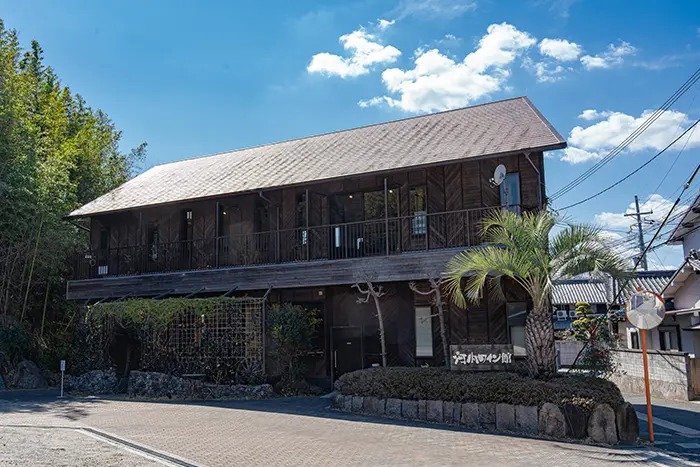
Enjoy the pairing of locally sourced ingredients and wine at MAISON INCO
Habikino City is also famous for its meat industry. Meat processing has been active for about 140 years, and has had a major influence on Osaka’s Food Culture including yakiniku and horumon.
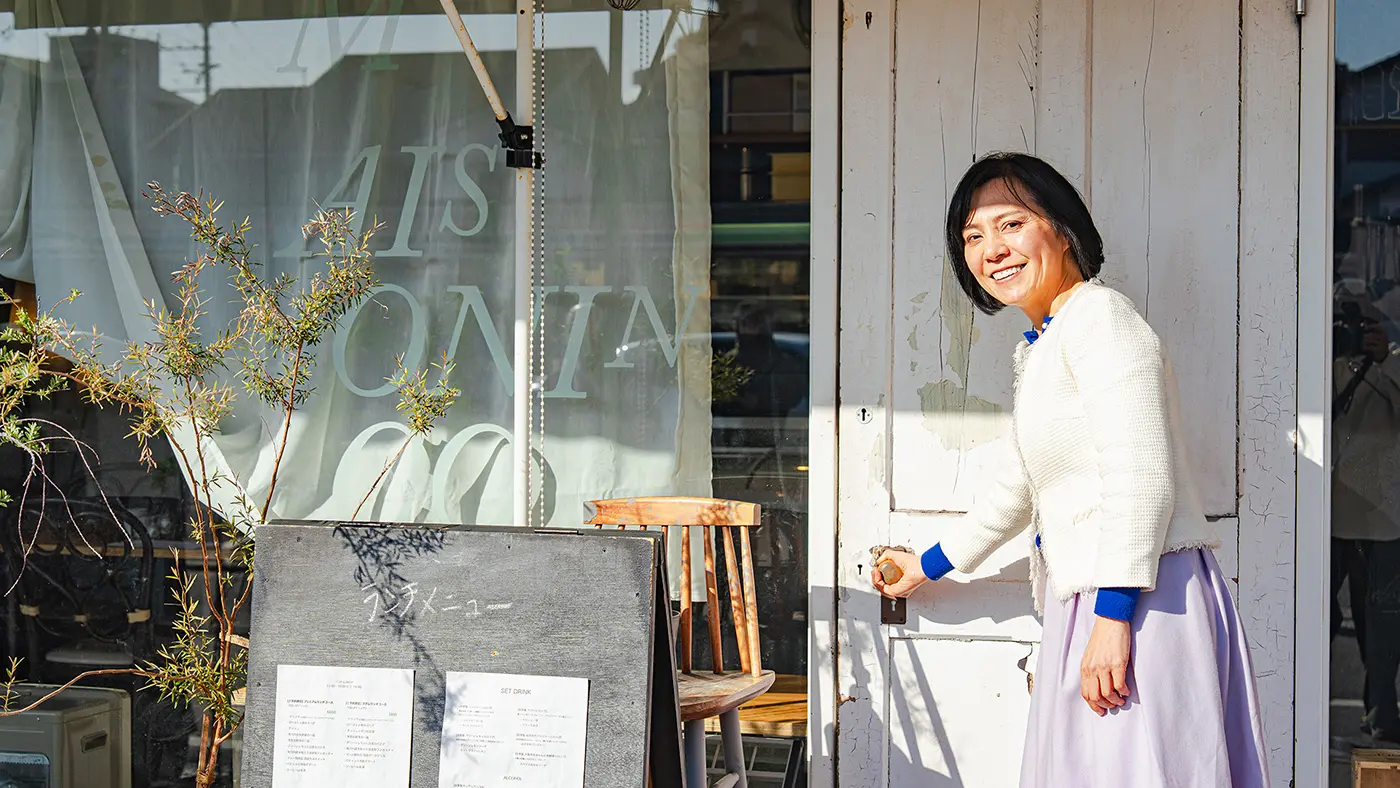
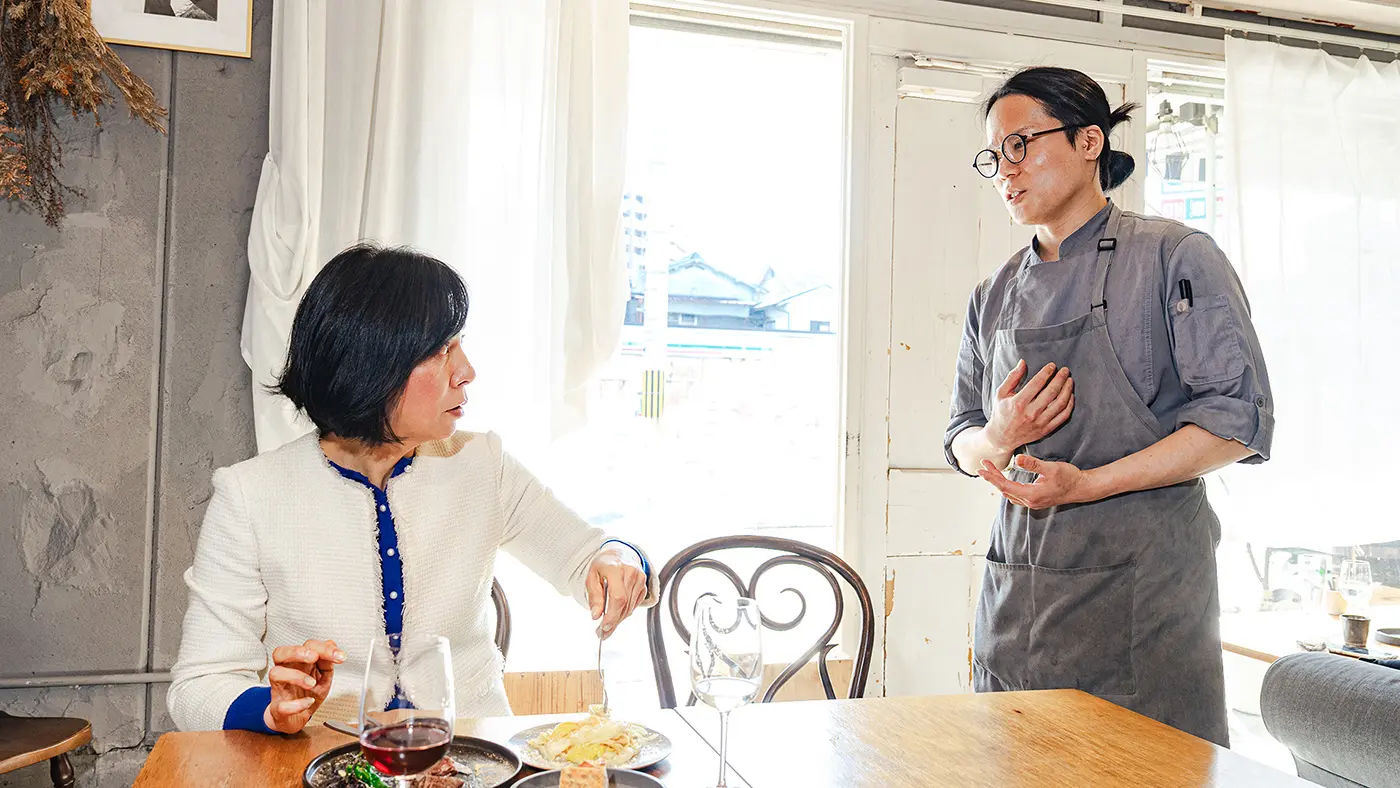
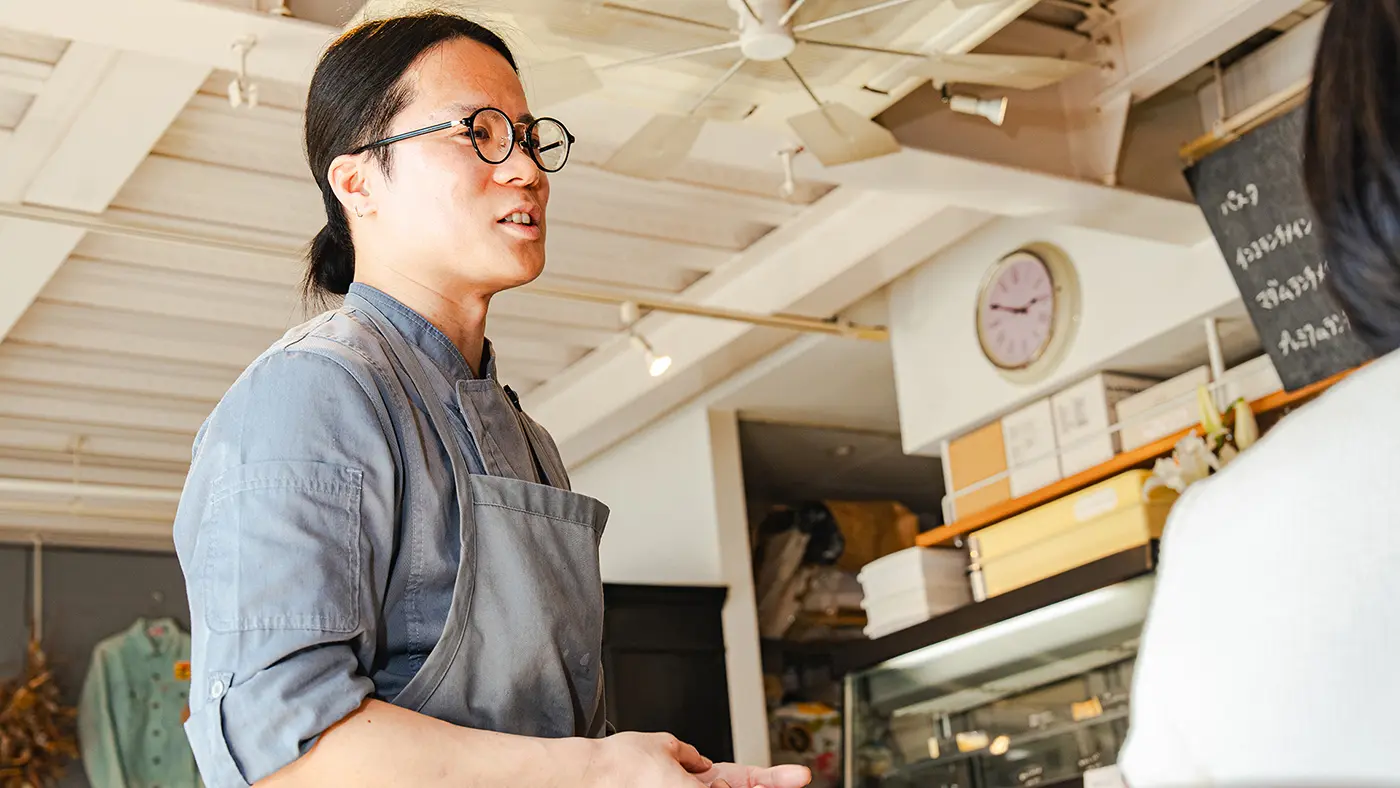
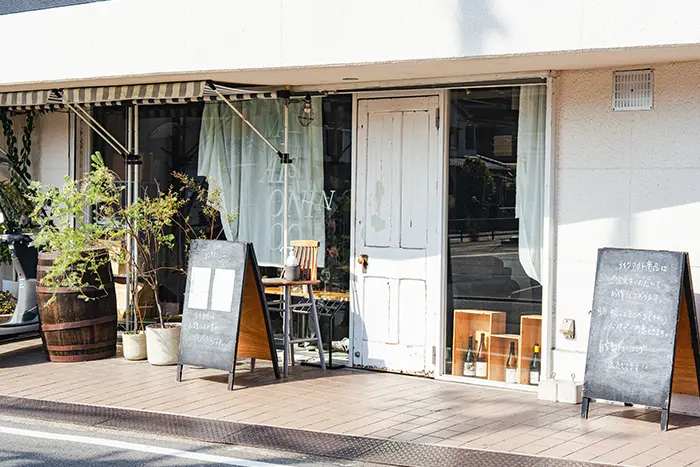
MAISON INCO, located near Furuichi Station, serves local wines alongside dishes made with meat processed in Habikino City and vegetables harvested in the Minamikawachi region. Chef Nawate Yuki recalls, "I was drawn to the appeal of local ingredients, and before I knew it, I was committed to using them."
Mori-san
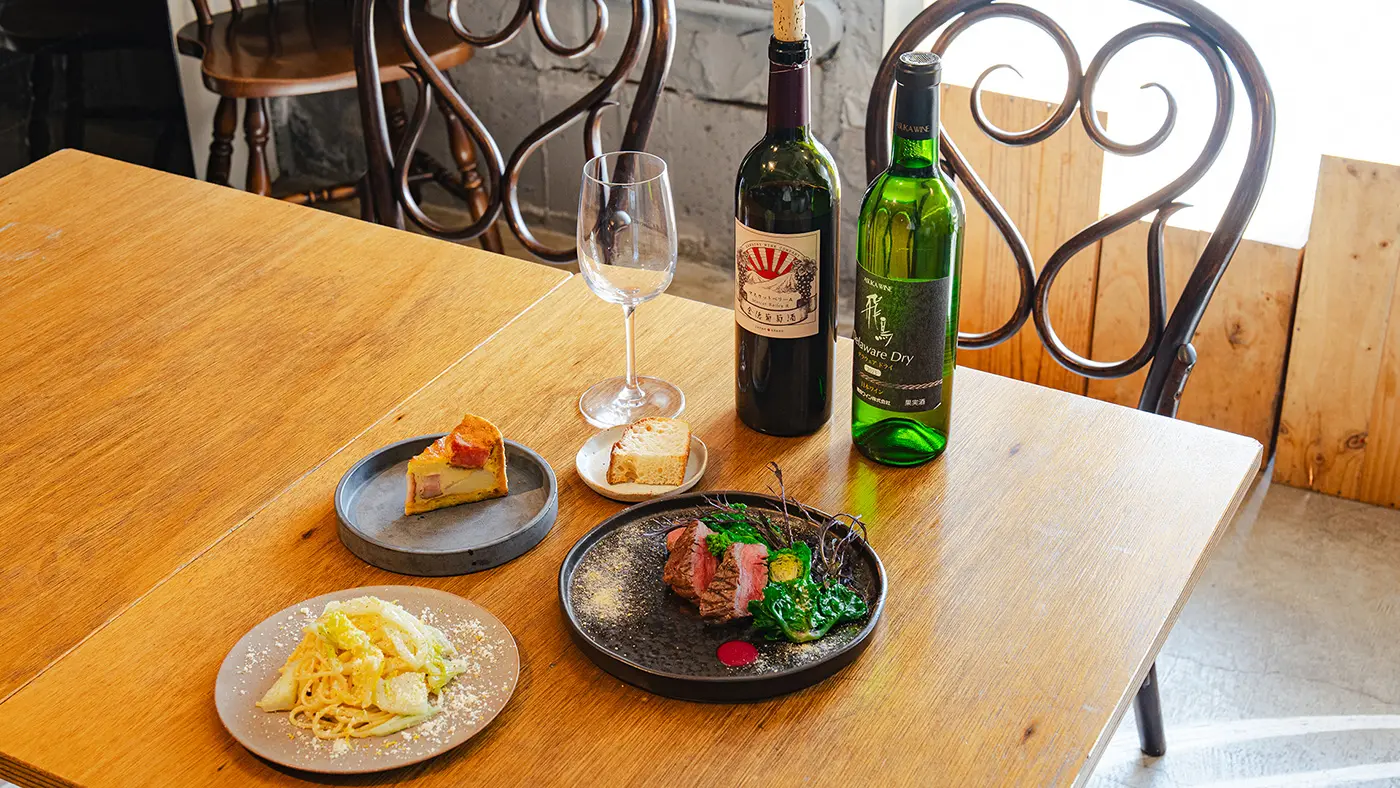
The light and elegant flavor of Asuka Wine's Delaware Dry goes perfectly with the vegetables and homemade quiche! Next up is the Wagyu steak. It has a delicate flavor that shows it was carefully prepared. The strawberry and beet sauce is quite unusual.
Nawate-san
Actually, I started my career as a pastry chef, which is a big reason why I use a lot of fruit, including strawberries.
Mori-san
That's why the balance of sweetness and acidity is so exquisite! The recommended wine was "Kintoku Wine Muscat Bailey A" from Kawachi Wine. The light tannins of Bailey A bring out the flavor of the delicate meat.
Mori-san
There is a French word called "terroir" that originated in the world of wine and has come to be widely used. Originally it referred to the natural environment surrounding a vineyard, but it has come to be used to mean the individuality of a place, including the surrounding culture and people. The combination of local ingredients and wine is an experience of experiencing the entire climate, truly terroir! What changes has happened to you, Nawate, since you started using local ingredients?
Nawate-san
In a sense, it has meant imposing limitations on myself, but I feel that by trying fermentation myself, I have been able to hone my cooking skills. I was fortunate to be able to go independent in my hometown and come across great butcher shops and wineries.
Breathe in the local air, meet producers and chefs, and enjoy wine made in Habikino and ingredients from Minamikawachi... this is the terroir, and it will be an unforgettable experience. Using this itinerary as a reference, we hope you will feel as if you are a character in a page woven by the town!
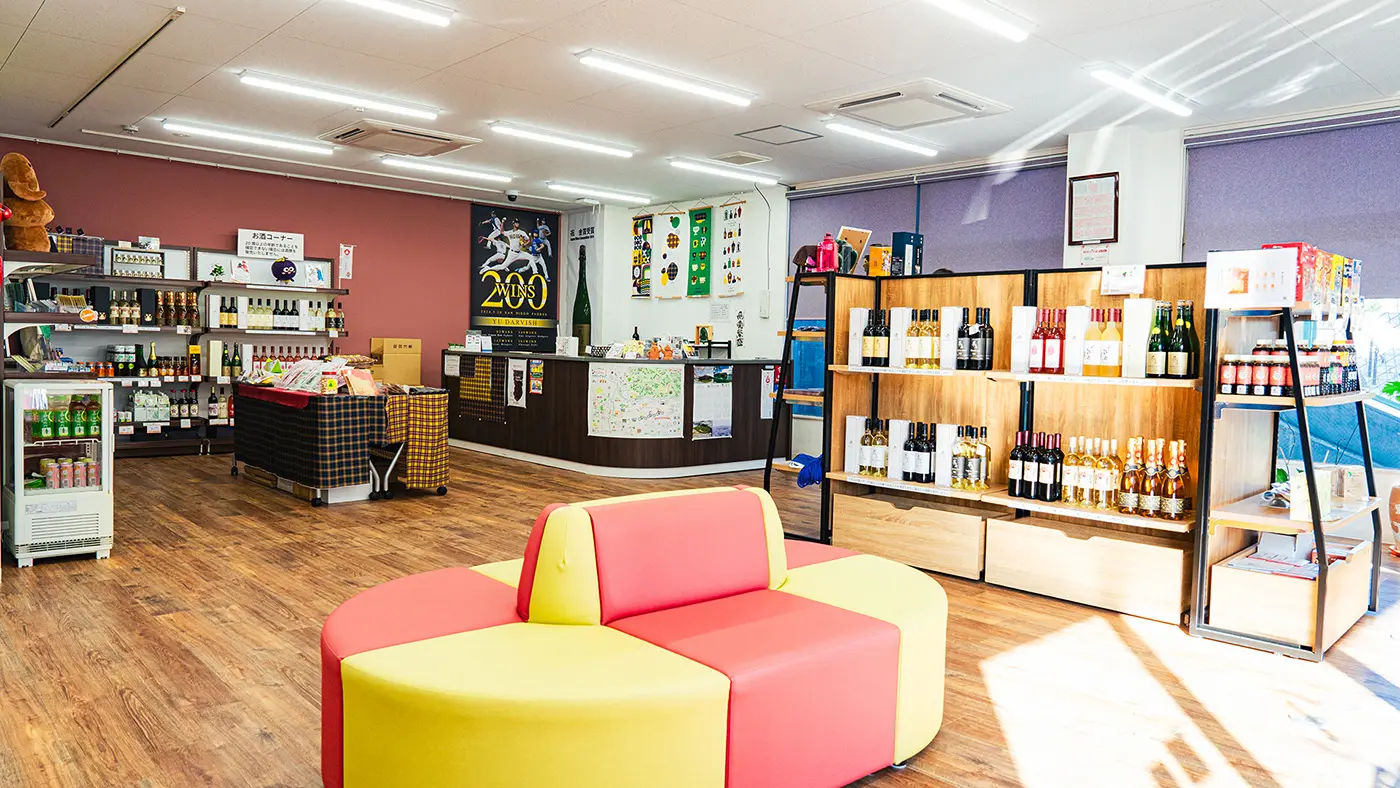
Habikino City souvenirs at the visitor center
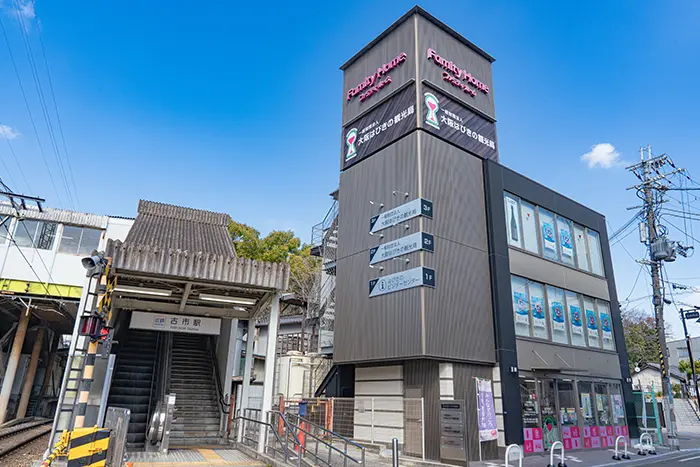
Located close to Furuichi Station, the Habikino Visitor Center is staffed with staff well-versed in tourism, providing information on the World Heritage Site Furuichi Kofun Group and the Japanese Heritage Site Takeuchi Kaido.
It also serves as an antenna shop, carrying a wide selection of souvenirs such as alcohol and food produced by companies in Habikino and Fujiidera.
On March 20th, mini muffins made with Shine Muscat grapes from Habikino will be released. This product was released in December 2024 and was a big hit. In addition to its sweet and sour taste, you can enjoy the crunchy texture and the popping texture of raisins.
These mini muffins are made with plenty of Muscat grapes, not just in the jam but also in the dough. They were developed in collaboration between a confectionery school and a local pastry shop.
Also around the same time, confectionery manufacturer UHA Mikakuto collaborated with the Osaka Habikino Tourism Bureau to release Shine Muscat flavored Ninja Meshi. Made with Muscat juice grown by young farmers, it has become a hot topic for its refreshing sweetness and tartness. It was a convenience store exclusive product sold only in the Kansai region, but it quickly sold out due to its popularity, and in late February it was made available nationwide in limited quantities. The appeal of grapes from Habikino has been spreading more and more in recent years!
Experience the blissful terroir with Habikino wine and meat dishes
This time, we asked wine enthusiast Mori to tell us about the appeal of Habikino-produced wines, such as Asuka Wine and Kawachi Wine. Osaka wine can now be tasted both in Japan and abroad, but there are many experiences that can only be enjoyed locally, such as visiting wineries and pairing wine with locally produced meat dishes. Mori also said, "Many of Osaka's winemakers have strong personalities. You can really feel the passion they put into making wine once a year...I fell in love with the people and got hooked on wine. Wineries with such easy access are rare even in the world, so please take a walk, hop on the train and come meet the producers!"
This time we've mainly looked at modern history through the lens of wine, but Habikino City also has many ancient historical sites and spots where you can experience the blessings of nature. We encourage everyone to visit!
Experience reservation
Make a reservation here
Make a reservation here
*This article was migrated from “Shittonka Osaka.” The information provided is current as of March 2025 and may differ from current conditions. Please check the official websites of each store or facility for the latest operating hours and details.
Photo:Satoru Kitagawa
Edit:Yoshiya Minamino
Direction:NINGEN Editorial Department(NINGEN Inc.)
